
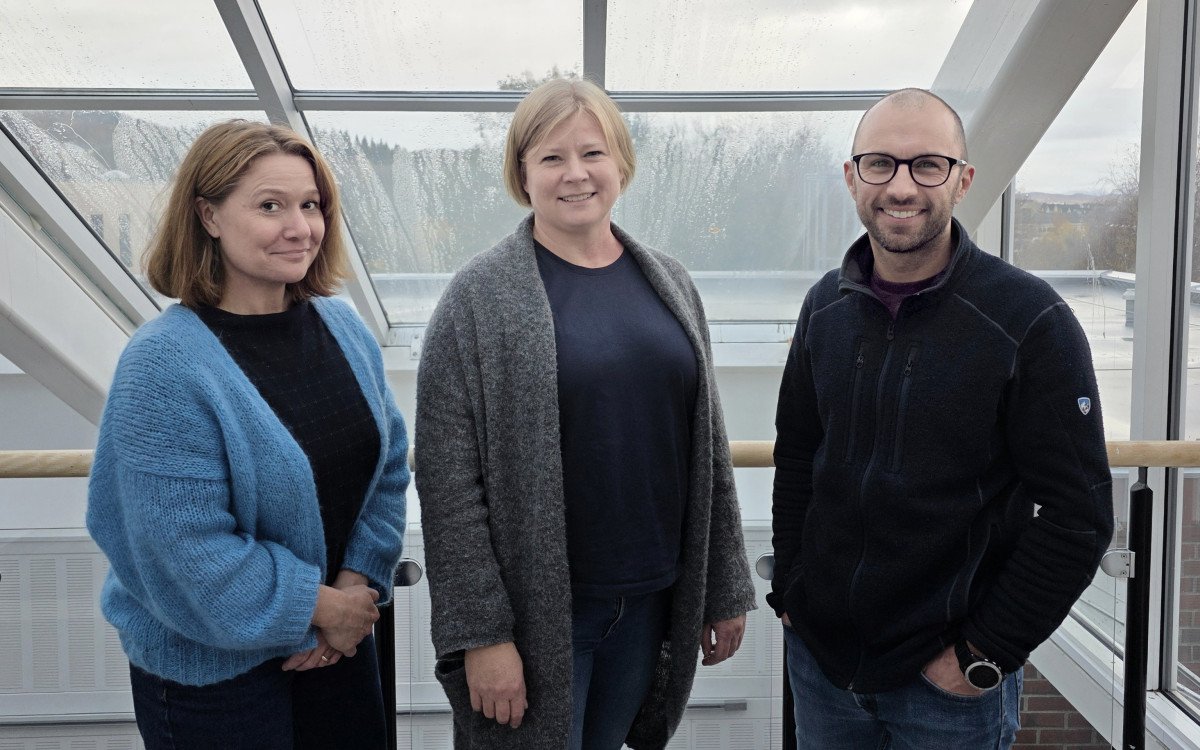
Researchers Lea Louise Videt, Ragnhild Holmen Waldahl and Daniel Weiss are the brains of Nordland Research in the YOUTH project. Photo: Marta Anna Løvberg
-
Ragnhild Holmen Waldahl
RESEARCH DIRECTOR / RESEARCHER II
The goal is to facilitate more targeted measures and help more young people gain a lasting connection to school and working life.
How many young people in Norway are actually outside of work, school or education? The answer depends on how you define and delimit the group. Which age group are you looking at? How long do you have to have been outside? And what does it really mean to be outside?
“The classic definition of the term is very broad. According to it, almost one in ten young people is outside,” says Ragnhild Holmen Waldahl, who heads the welfare research group at Nordland Research Institute and the new research project Youth Outside Work and Education – Understanding Traits and Hurdles (YOUTH), which recently received 12 million kroner in support from the Research Council of Norway.
The project will provide new insight into what characterizes young people who, over time, are outside of work, education and training. Today, the term encompasses everything from young people with serious challenges to a millionaire's son sailing around the world.
– We need a more precise and knowledge-based definition to be able to distinguish between different groups and develop better measures, says Waldahl.
Inspired by Danish research
Internationally, the term NEET (Not in Education, Employment or Training) is used, but this category has also been criticized for being too imprecise. In Denmark, Researchers therefore developed a more accurate model called "at-risk NEETs".
– We are collaborating with Iben Bolvig at VIVE, who led the Danish study. There, the registered proportion of young people in exclusion was reduced from over 10 to 2.7 percent when a more precise definition was used, says Waldahl.
The project will further develop this model for Norwegian conditions, including by adjusting the age limits and assessing how various measures fit into the picture.
Building national database
A central part of the project is to build a new database with individual data from several registers, such as Statistics Norway, the Norwegian Patient Register, the Norwegian Directorate of Education and Training and the Armed Forces.
– When we know more about who is at risk of long-term exclusion, we can also develop more targeted measures, says Waldahl.
– The database will also be an important resource for future research projects.
NAV and the county municipalities of Nordland and Møre og Romsdal are key partners in the project. They will both contribute practical knowledge and actively use the results in the development of their own services.
– We are working closely with NAV and the county municipalities to strengthen the follow-up of young people and look at how resources can be better coordinated, says Waldahl.
– Together we will explore new models for collaboration and improved follow-up, including in light of the new youth guarantee and the expansion of the follow-up service.
Young people should be heard
However, the project is not just about numbers. The young people's own experiences will also be given an important place.
– You can feel outside even if you are in work or school, or inside even if you are not in education or work. That is why we will interview young people in vulnerable positions and hear how they themselves understand the situation, and how they experience the offers from NAV and the Follow-up Service, says Waldahl.
YOUTH is a response to the government's social mission to get more children and young people into education and work. The project is led by Nordland Research Institute , with research partners from VIVE, Nord University and Molde University College.
– We hope the project can contribute to a clearer knowledge base and make a real difference for young people who are at risk of falling behind, says Waldahl.
