
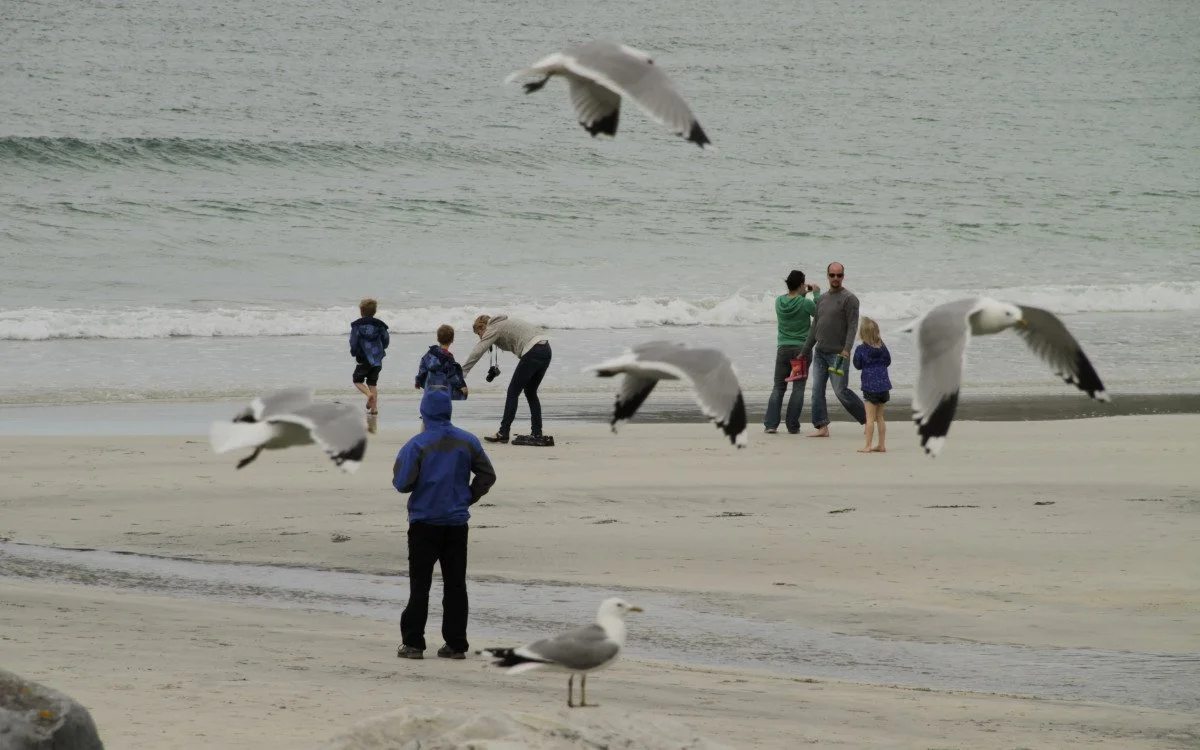
A new study shows that we Norwegians may not understand the importance of the ocean as well as we think. Photo: Tore Schöning Olsen / nordnorge.com
71 percent of Norwegians believe that the authorities should strengthen their commitment to protecting the ocean, but underestimate their own impact on the state of the ocean.
Norway is a country with a long tradition of being connected to the sea - from Vikings and fishermen to businesses such as tourism and aquaculture. Over 70 percent of our export income comes from the sea, and many of us seek recreation and nature experiences along the coast. Yet a new study shows that we may not understand the importance of the sea as well as we think.
“Although many people say they are concerned about the health of the ocean, most people feel neither responsibility nor trust that anyone - whether government, business or individuals - is actually doing anything about it,” says Liz Morris-Webb, senior researcher at the Nordland Research Institute .
The survey is part of the EmpowerUs research project, which aims to strengthen coastal communities in the face of environmental, economic and social challenges.
How do we feel about the ocean - and what do we actually do?
The study reveals several interesting findings:
42 percent say they feel gratitude when they think about the ocean. 41 percent feel calm.
Over 80 percent value the ocean for clean air and water, energy and resources.
68 percent are concerned about the health of the ocean, but only 26 percent feel personal responsibility.
72 percent say they are willing to change their lifestyle for the sake of the ocean, but 21 percent want help/resources and support to make it happen.
Only 26 percent have confidence that the authorities will protect the ocean. Even fewer have confidence in business, local communities and individuals.
“To ensure a sustainable future for the ocean, we need to strengthen people's knowledge about how the ocean affects us and how we affect the ocean. It's about more than knowledge, it's about connection and responsibility,” says Morris-Webb.
Ocean understanding on the political agenda
The term "ocean literacy" (internationally known as ocean literacy) is about understanding how we humans and the ocean are connected. It is about knowing what the ocean means to us, and what we can do for the ocean.
This has also become a political priority. The Norwegian Committee for the UN Decade of Ocean Research recently highlighted the EmpowerUs data in its mid-term report, calling for more research and action to strengthen people's understanding of the ocean in Norway before 2030.
“This is an important step. Everyone, from policymakers to educators, businesses and individuals, needs to understand their role in ensuring a healthy ocean,” says Morris-Webb.
– Without help from society it will be difficult or even impossible for Researchers and politicians alone to translate knowledge into action, she says.
Maiken Bjørkan, research manager at Nordland Research Institute and coordinator for EmpowerUs, believes that the solution lies in collaboration:
– If we are to succeed in meeting the challenges facing coastal communities, we must develop solutions together, across disciplines, sectors and levels, she says.
In Norway, EmpowerUs has worked with the island community of Træna to co-create such solutions.
“We already see that our research contributes to political priorities. It is precisely such studies and site-specific ones that help us understand what is needed both locally and globally,” says Bjørkan.
Three tips for better ocean understanding in Norway
The researchers behind EmpowerUs point to three ways forward:
Participation is key: Public and private projects should be developed in collaboration with people - across sectors - with concrete goals and funding that actually comes with it. A national ocean understanding strategy is one way to guide the development of such participation.
Make it personal: People need to become aware of how their own choices affect the ocean, and how small changes can make a difference.
No one should be left out: Strengthen the connection to the sea through culture, nature and community - especially among groups that are rarely included.
