
—Everyone talks about outsiders, but we're talking about different things
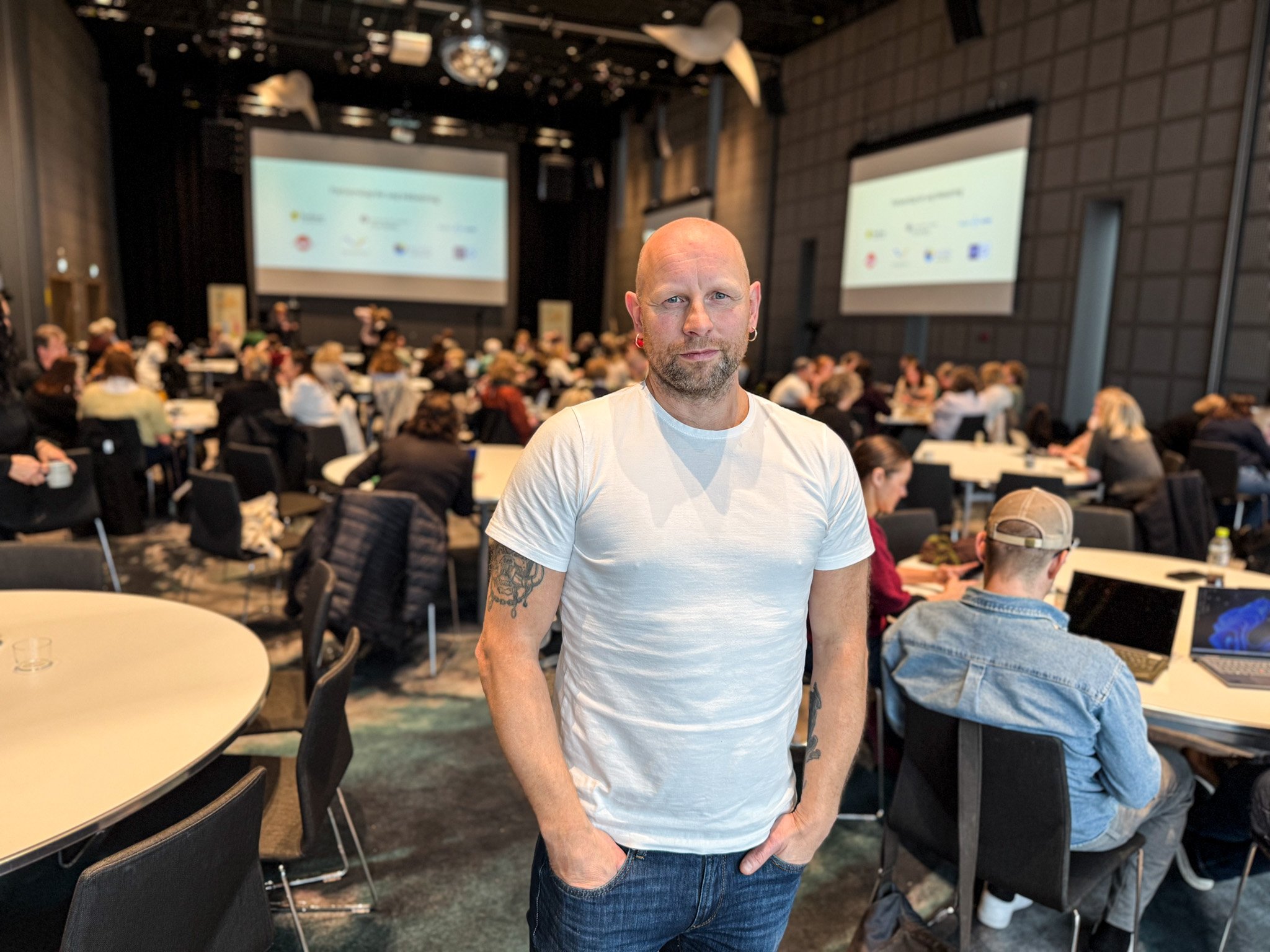
Collaboration. Ronny Bones Olsen has worked with exclusion for many years. He believes it would be very useful to have a common definition of what we are talking about, and to collaborate more across different agencies. Photo: Tarjei Abelsen
It is important to have a clear definition of what exclusion is, and what the biggest risk factors are – so that we can implement measures that work.
That is one of the conclusions participants who attended the 2026 Growth Conference in Bodø are left with.
At the conference, research leader Ragnhild Waldahl from Nordland Research Institute a large project that aims to be able to say more precisely who ends up in exclusion – and not least why.
"Everyone talks about exclusion, but we're talking about different things. If we can't describe precisely who we're trying to reach, we can't implement targeted measures," says Ronny Bones Olsen.
Problematic with unclear definition
Olsen is an advisor for public health and local community development in Nordland County Municipality, and has worked with exclusion in various roles for over ten years. He believes that the efforts being made to work against exclusion are unnecessarily broad.
"There are numbers and percentages being thrown around from various agencies about the extent of exclusion, but who is identified as part of the challenge varies enormously," says Olsen.
He believes it is problematic that we do not have a more precise definition.
—It's easy to do something and say that we're working to reduce exclusion, but we don't know if we'll succeed when we don't agree on who we're talking about.
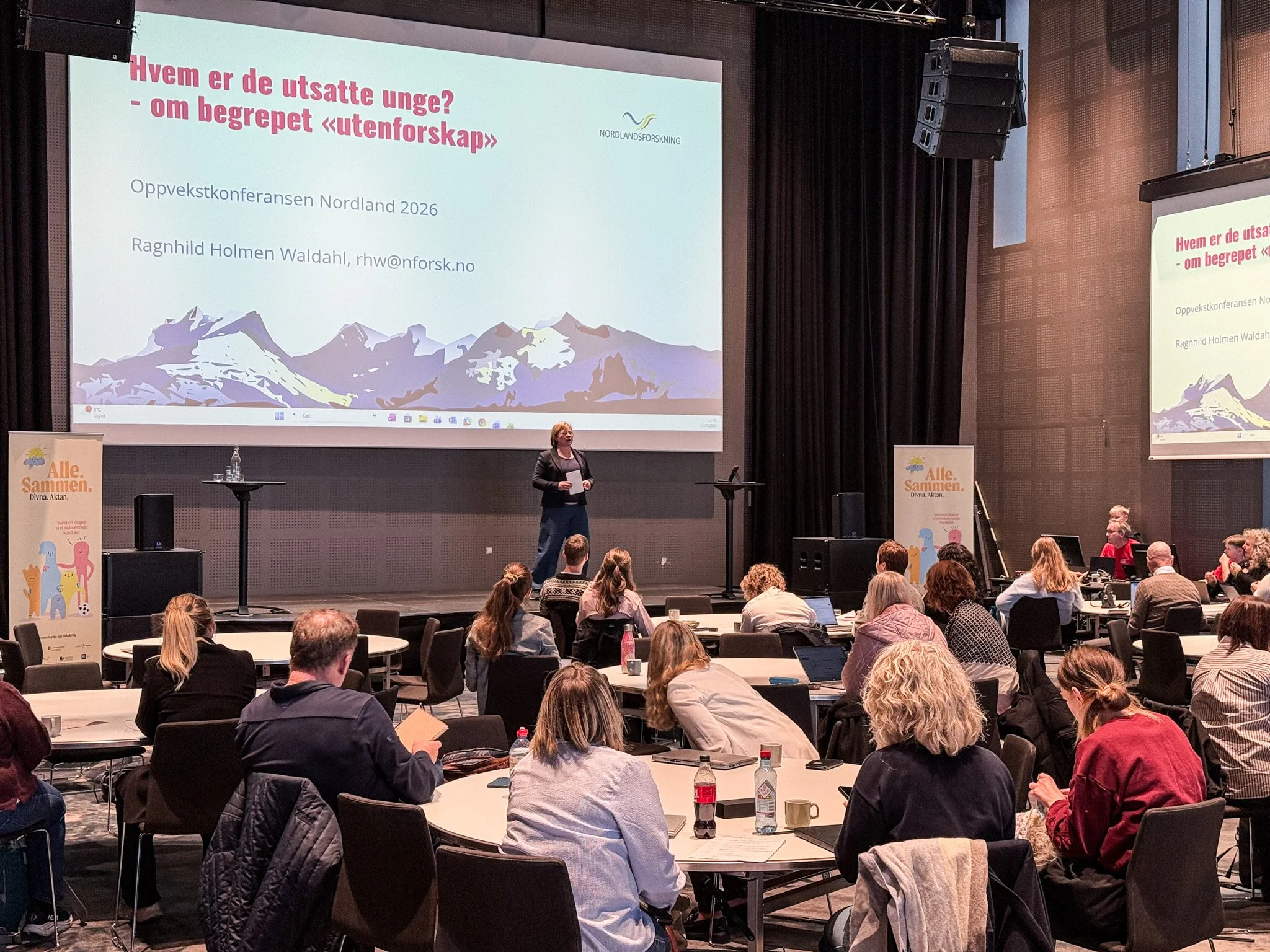
Research project. Research leader at Nordland Research Institute , Ragnhild Waldahl gave a presentation about the YOUTH research project, which aims to find a good definition of what exclusion is - in order to implement measures that work. Photo: Tarjei Abelsen.
Will create clarity about outsiders
In his presentation of the research project Youth Outside Work and Education – Understanding Traits and Hurdles (YOUTH), this was a key point.
Waldahl asked everyone in the audience to answer what they define as exclusion, and loneliness was the most common response.
— There were few questioning faces in the room, exclusion is perceived as a self-explanatory term. But it quickly becomes a blanket term that encompasses very different understandings of who the target group is. If we as a society are to prevent loneliness, it requires completely different measures than if we are to get more people into work, says Waldahl.
While in Denmark it has been found that in reality it is around 2.7 percent who really need help, in Norway they operate with completely different numbers depending on who you ask and how you define exclusion – as you can see from the example below:
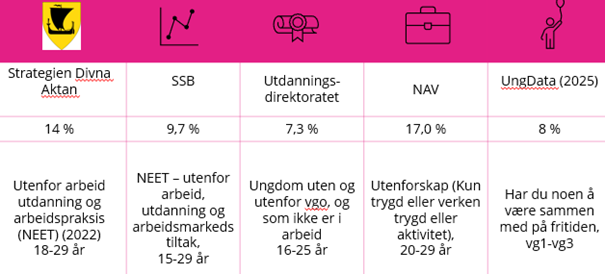
Different numbers. Outsourcing has no clear definition, and different agencies operate with different definitions and numbers.
"We have received money for a project where we will look at this, and over the next three to four years we will try to do something about this," says Waldahl.
The Research Council of Norway has provided 12 million kroner to the project, which will establish a database with relevant data, which will make it possible to calculate what the risk factors for exclusion are in Norway.
Excited about the results
The municipal manager for Education, Culture and Integration in Dønna Municipality thinks it is interesting information to get in the work:
—It will be exciting to hear when we get data on Norwegian conditions.
—I think it's important. There are many risk factors, finding the most important ones can make it easier to implement measures, rather than believing that all risk factors can lead to exclusion, says Mette Anfindsen.
Dønna Municipality has had an early intervention plan since 2024.
—We look at vulnerable children and young people and how we work interdisciplinary around them, and how we organize ourselves and which arenas we meet them in, explains Anfindsen.
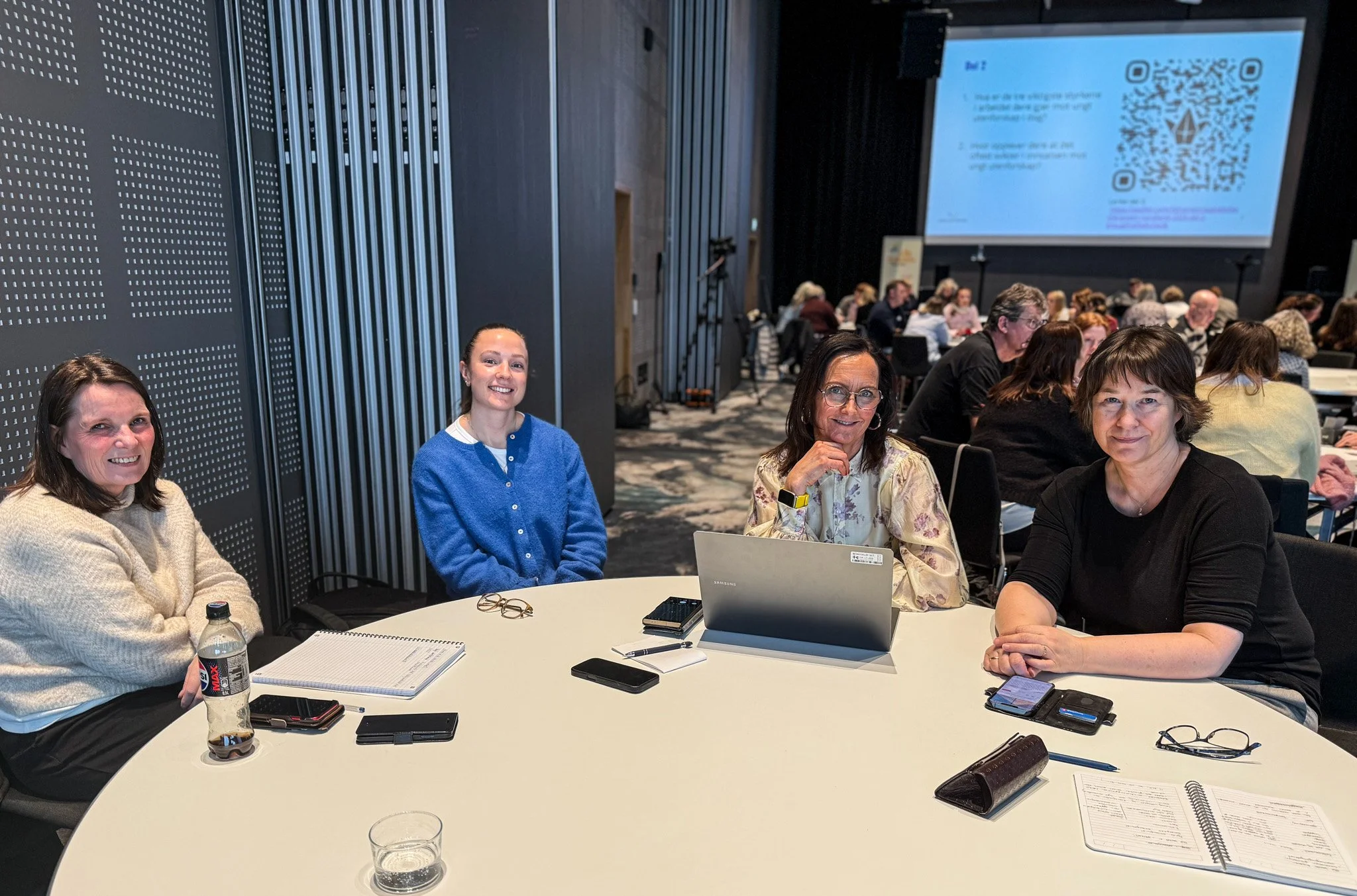
Group assignment. After a day and a half of professional lectures, this group appreciated having assignments to discuss. From left: Weronica Gratland (family coordinator, NAV Bø), Kaja Tungseth (family coordinator, NAV Sortland), Hege Antonsen (municipal manager of upbringing and culture, Herøy municipality) and Mette Anfinsen (municipal manager of upbringing, culture and integration, Dønna municipality).
Can examine all locally
She says that people in Dønna have worked systematically over time on the problem, and she believes that people locally in Helgeland can find out a lot about their own conditions – even before they have the national figures.
"We have such small municipalities that we can actually investigate where all our young people have gone after they left school, just by calling around," says Anfindsen.
She refers to the neighboring municipality of Leirfjord, which did just that – tried to find out what was behind the high numbers they had for exclusion in the municipality.
"When they were finished, there were only two people who were defined as someone for whom action could be taken," says Anfindsen.
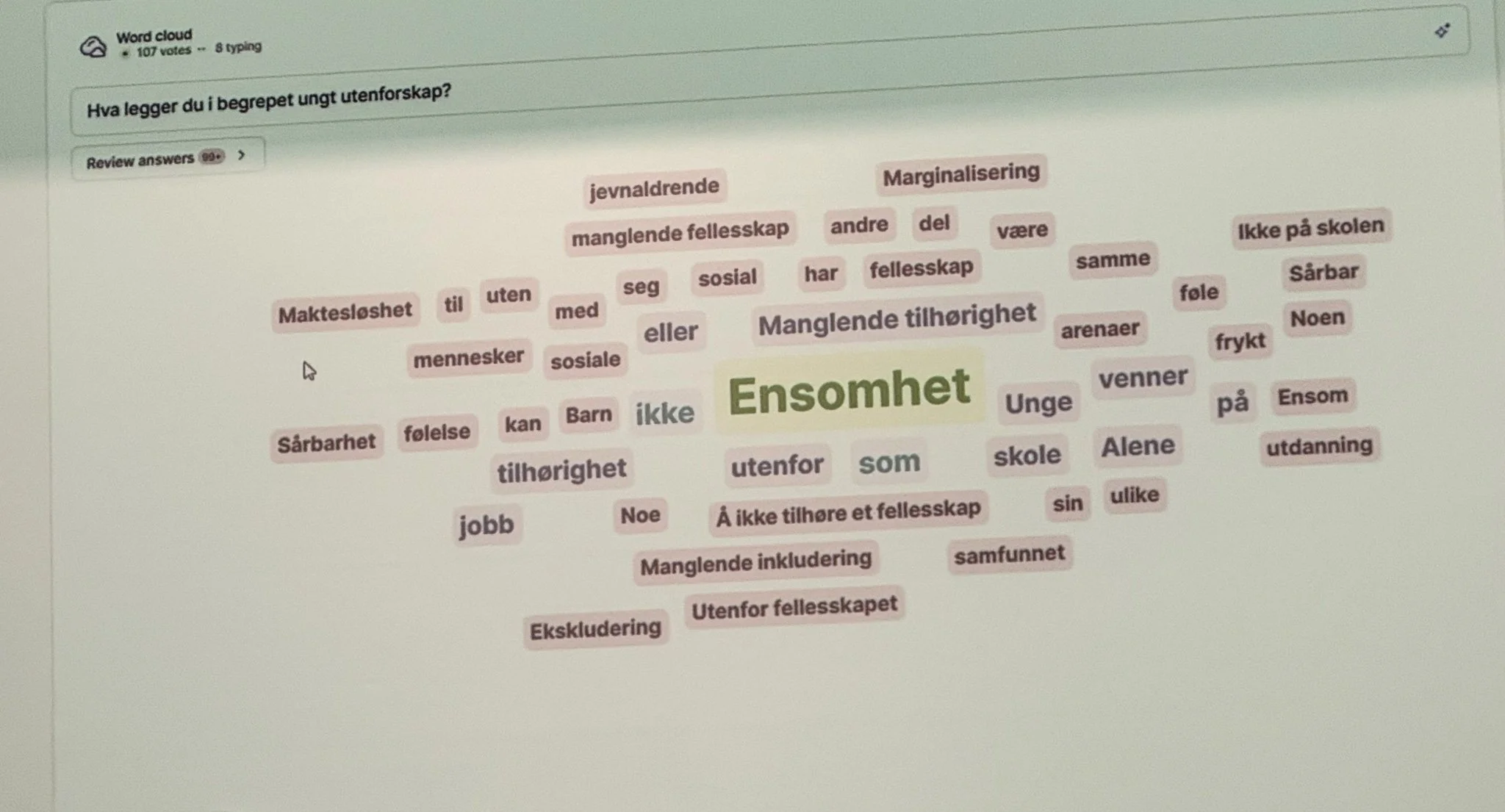
Outsideness . These are the words that the professionals at the Growing Up Conference associate with outsideness.
—We need everyone
Ronny Bones Olsen is organizing this year's Growing Up Conference through the county council, and he has clear hopes for what the participants will take home.
—I hope, first and foremost, that they have gained a greater understanding and new insight into the fact that we need to take a stronger approach to including more people, says Olsen.
He refers to one of the lecturers' statements that "if we facilitate the weakest, it will benefit us all."
"We have few young people in Nordland, but we need everyone. We cannot live with so many not having the opportunity to contribute," says Olsen, and continues:
"If we do what we've always done, we'll get the same results. We have to find new ways of working and become better at working together," says Olsen.
The 2026 Growth Conference was organized by Nordland County Council, the State Administrator of Nordland, Nord University, the Local Government Sector Organization (KS), Nav i Nordland and Nordland Research Institute .