
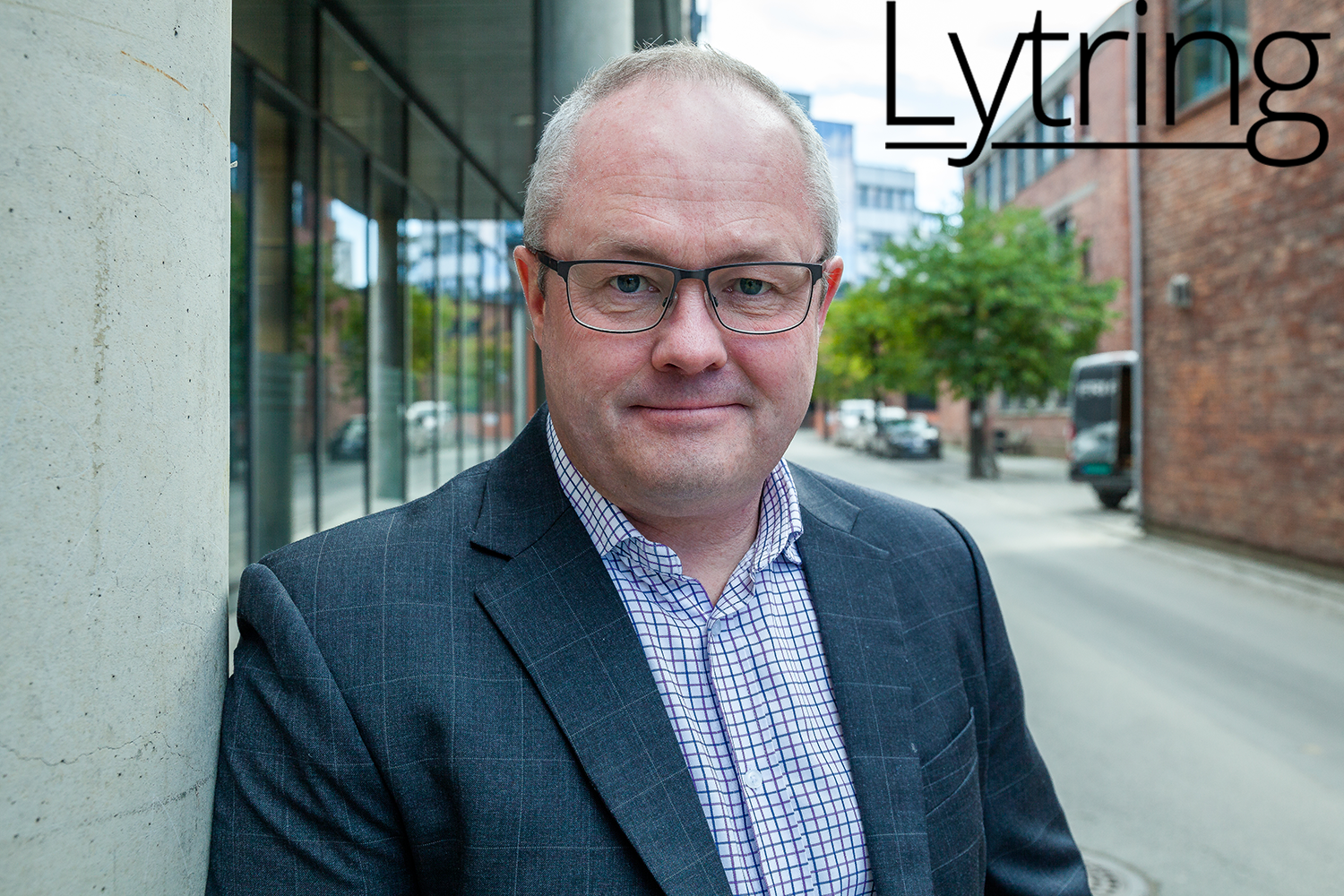
Researcher on sick leave. Arnstein Mykletun at the Norwegian Institute of Public Health believes that the absence debate is characterized by ideology, more than facts. Photo: Simen Gald
In Norway, women are 70 percent more likely to be on sick leave than men, but when the reasons are discussed, the debate is characterized by political wishful thinking and not facts.
This is the opinion of Professor Arnstein Mykletun, who has led two expert groups where the level of sick leave in Norway has been the topic. In one, they looked specifically at gender differences, but there is no sure answer as to why the differences exist, according to Mykletun.
Despite the lack of good explanations in the research, the debate is sometimes characterized by a certain degree of certainty. Mykletun emphasizes that we must distinguish between wishful thinking and actual knowledge.
He is now leading the research project "Gender differences in sick leave. Causes and testing of possible measures", and on March 25th he will come to Bodø to participate in Lytring their debate on the topic.
No one gives a good explanation
Mykletun believes that there are several holes in the most commonly used explanatory models, such as the claim that women have a greater actual workload than men when the hours at work and on caregiving tasks are added together.
—Statistics Norway has figures on this, and those figures show that the number of hours is higher for men, says Mykletun.
Counterproductive for women
Women-related health problems are another explanatory model, where biology and hormone-based ailments are emphasized. Mykletun warns for several reasons. He believes that the biology track can quickly lead to a perception that women cannot have the same jobs as men. This could weaken women's actual opportunities to build a career.
—In addition, there are biological differences in men's disadvantage as well, but we rarely talk about that. Young men have very high testosterone levels that affect risk assessment. It is a hormonal disadvantage that is sometimes downright life-threatening.
NAV is concerned
Kristin Røymo is regional director for NAV Troms and Finnmark. She is also concerned with women's sick leave.
"The sectors with the highest sick leave are dominated by women," Røymo states, pointing in particular to the health sector, where shift work is widespread.
—At the same time, it is not the case that shift work alone explains the difference. There are male-dominated sectors with shift work without a correspondingly high level of sick leave. This raises the question: Is it the shift work, or is there something about women's situation, says Røymo.
NAV has no good explanation for why women are the most frequently absent from work due to illness, but is afraid that the costs of total sick leave in Norway may be greater than society can bear over time.
"If we start thinking that sick leave is free for society, we have misunderstood something fundamental. It is not only costly, it can also be very stressful for workplaces where many are gone and those who remain have to bear an ever-increasing burden," says Røymo.
—It can create a vicious circle: Those at work have to run faster, the strain increases, and that in turn can lead to more sick leave.
IN Lytring -debate Mykletun and Røymo will be joined by KrFU leader Ingrid Olina Hovland and Professor Kari Ingstad at Nord University.