
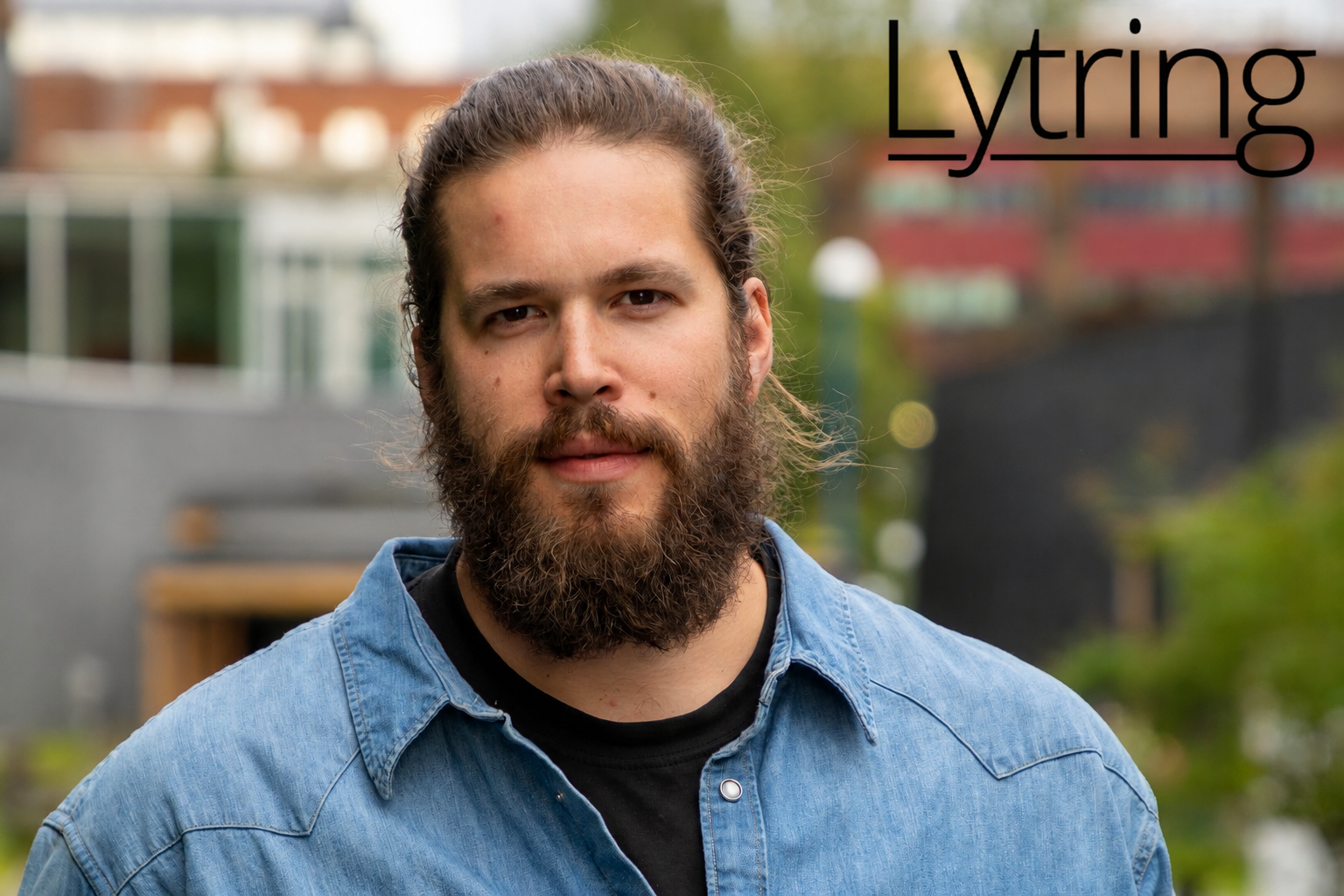
Wasting money. UiT researcher Troy Broderstad believes Norway is wasting money on measures taken to get people to live in Northern Norway. Sweden does not spend money, but the trends for emigration are identical. Photo: Kjetil Rydland
Despite major government measures, people continue to move from Northern Norway. Now, a UiT researcher believes that a more controlled centralization of the region may be the way to go.
– We must stop spreading the measures too thinly and start making the difficult decisions about which communities have the right to life in a 50 to 100 year perspective.
– We must dare to think differently and make slightly tougher decisions, says Troy Saghaug Broderstad, associate professor at the University of Tromsø.
On Wednesday, May 20th, he will participate in Lytring -debate in Stormen Library in Bodø. The question is asked whether it is time to give up on action packages and lofty visions, and rather let nature reclaim parts of Northern Norway.
Figures from Statistics Norway show continued net emigration from all three northernmost counties when excluding refugees from Ukraine and other immigration. Nordland had net emigration of 1,463 people in 2025, while Troms and Finnmark had net emigration of 1,012 and 412 respectively.
– The development is similar in Norway and Sweden
Broderstad believes the numbers show that current district politics are not working as desired.
– The biggest measure is the action zone in Nord-Troms and Finnmark, with tax benefits and financial incentives. It is difficult to see that it has had the effect hoped for, he says.
He points out that over time, Norway has spent far more money on regional politics in the north than Sweden.
Nevertheless, the development is very similar on both sides of the border.
“Sweden has spent much less money trying to influence settlement, but the trends are almost identical. People are moving towards larger places with educational opportunities, a job market and services,” says Broderstad.
Urbanization trend in the West
Broderstad believes that the development must be understood as part of a larger urbanization trend that affects large parts of the Western world.
– Many young people have different expectations of what a local community should offer than what they had 50 or 100 years ago.
Broderstad points to challenges related to distances, transportation and access to services in many small communities.
At the same time, a study conducted by Nord University shows that climate and weather are one of the most important reasons why people move.
Defense of the country
Broderstad believes that the state should prioritize jobs, business development, and robust regional centers over broad, person-oriented support schemes.
"If you want to get people to stay in the North, you have to facilitate business and industrial development. It's about jobs, infrastructure and stable local communities," he says.
At the same time, he emphasizes that settlement in the north is also about preparedness and security policy.
– In a total preparedness perspective, civil society is part of the first line of defense of the country. If we are to be able to defend the region, the population must have a certain size, which is related to infrastructure and what is worth defending.
Broderstad meets Synnøve Vereide Trampe from Aftenposten, Helga Pedersen from Bondelaget, Thor-Erik Sandberg Hanssen from Nord University and Erlend Bullvåg from Kunnskapsparken Bodø for a debate.
The debate is organized by Lytring in Stormen Library from 6:00 PM to 7:30 PM, and will also be streamed on Facebook and Youtube.