
AI is being used in municipalities without clear guidelines
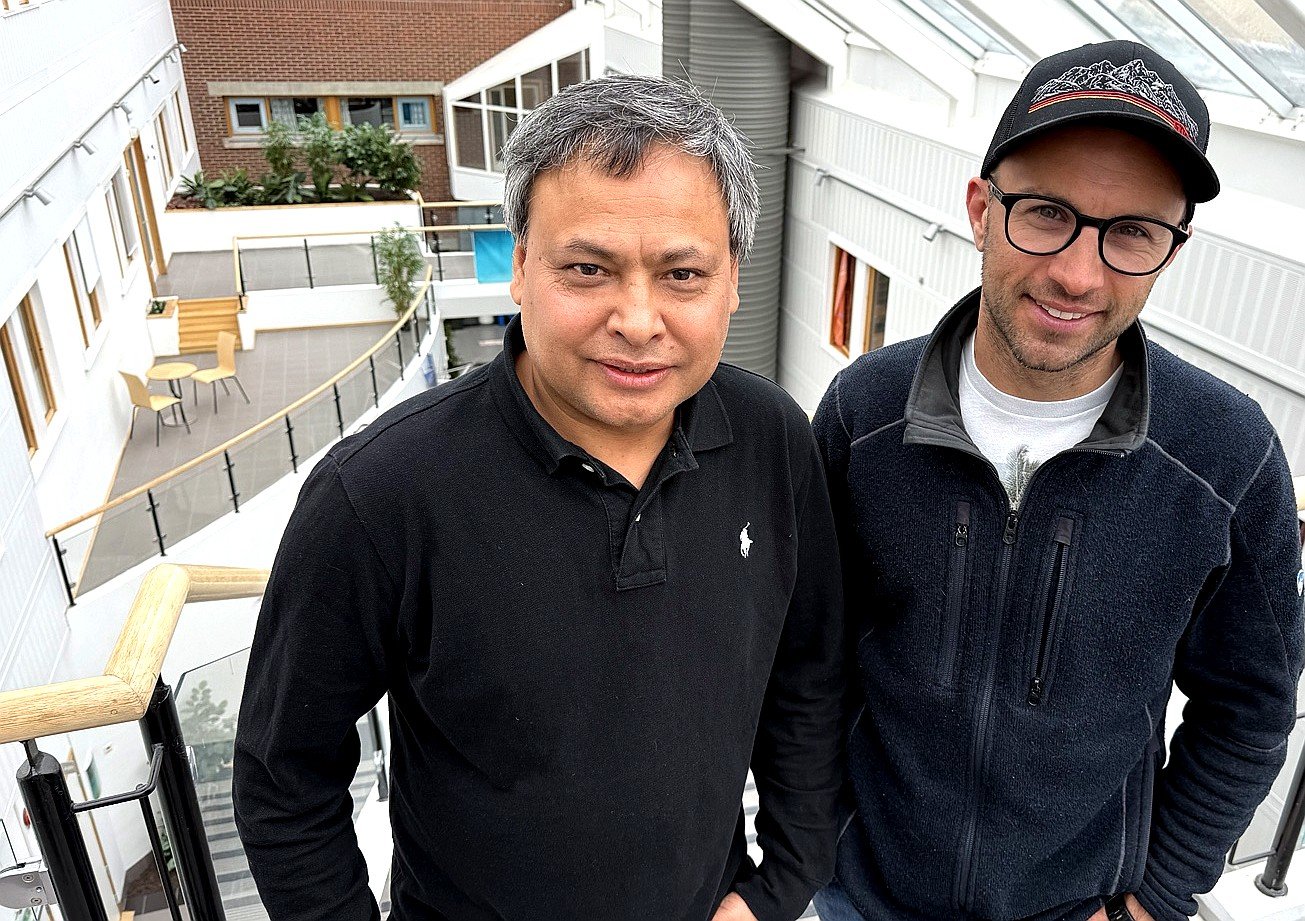
AI challenges . Small rural municipalities have unique challenges when it comes to adopting AI, Nordland Research Institute has produced a report that includes recommendations for the way forward. Here, researchers Daniel Weiss and Raj Kumar Thapa. Photo: Tarjei Abelsen
According to the government, the public sector will use AI to develop better services and solve tasks more efficiently by 2030. But district municipalities in Nordland lack both resources and guidelines.
Text: Thoralf Fagerthun
The report "Artificial Intelligence in District Municipal Health and Care Services: Practices, Opportunities and Need for Responsible Implementation", prepared by Nordland Research Institute , the report points to a clear gap between national ambitions and municipalities' capacity to adopt the technology.
– Many district municipalities lack both time, structure, guidelines and expertise to implement AI, says senior researcher Iselin Silja Kaspersen.
– In addition, some municipalities have many adult employees who may be reluctant to use AI, because it is unknown and they are unsure whether they have the knowledge to use AI safely.
Support for further work
The research project behind the report was initiated and funded by the Foundation Nordland Research Institute , who has seen a need for more knowledge about how AI can become part of municipal health and care services in the district.
– AI has been highlighted in national strategies as a key tool for developing better services and solving tasks more efficiently in the health and care sector, says Daniel Weiss, senior researcher at Nordland Research Institute .
– But rural municipalities have a number of challenges that make the implementation of AI difficult, such as small staffs with limited capacity, lack of technology expertise and vulnerable infrastructure, such as poor roads and unstable power grids and internet for users during bad weather.
The report is based on interviews in the municipalities of Beiarn and Vestvågøy, as well as a survey in 20 small and medium-sized municipalities in Nordland and a review of relevant management documents.
– The goal is to provide a knowledge base that municipalities, national authorities, healthcare professionals and others can use in the further work on strategically responsible implementation of AI in health and care services, says Weiss.
Unclear guidelines
Nordlandsforskning's research shows that a good number of municipal employees have already used AI, many without even realizing it.
– Employees express that they are unsure about what is considered AI, and many use AI without realizing it. The technology is hidden in search engines, and in some journal systems and administrative tools, says Kaspersen.
– In addition, AI services such as ChatGPT and Copilot are used to design text, for example in case drafts and documentation work. This is often done on one's own initiative, since guidelines for the use of AI are often lacking.

Iselin Kaspersen:
“Healthcare professionals are concerned that errors may occur when using AI encounters aspects that have an impact on patient safety”
The report shows that most employees feel that their municipality does not have clear guidelines for the use of AI. The survey reveals that only 11 percent state that their municipality has clear guidelines, while 43 percent do not know.
– This creates a situation where employees know neither what is legal nor what is safe, says Kaspersen.
Conditional trust
Municipal employees' trust in artificial intelligence varies. Administrative employees are fairly positive, while healthcare personnel are more skeptical. In total, 71 percent of municipal employees say they trust AI, but only if the systems are quality assured by a professional.
– Healthcare professionals are concerned that errors may occur when the use of AI encounters aspects that have an impact on patient safety, says Kaspersen.
– Although they are positive that AI can in many cases provide better user experiences, they are also concerned that AI will replace human contact, which they believe will significantly weaken the quality of health and care services.
Ideal municipality size
The report also indicates that the size of the municipality may have an impact on the ability to ensure responsible implementation of AI. Nordlandsforskning's report shows that the smallest municipality, Beiarn, struggles with small professional environments, high pressure on employees, an increasing proportion of elderly people and a lack of resources. At the same time, we see that the medium-sized municipality, Vestvågøy, has room to allocate resources and work more systematically with the introduction.
– Previous reports have highlighted that medium-sized municipalities are ideal for adopting AI. They are large enough to have the necessary resources, professional environment and digital expertise, and at the same time they are small enough to have short decision-making paths, says Weiss.
– Vestvågøy has already implemented AI-based welfare services, he says, highlighting the service "Nattugla", which analyzes movement patterns of residents in care homes and can detect falls and other potentially harmful activity.
At the same time, the municipal leadership in Beiarn has decided that AI should not be used in a work context, as a precautionary measure.
National support needed
District municipalities in Nordland therefore have a long way to go before AI becomes a good and effective helper in everyday work. The report has several suggestions for how the situation can be improved.
– We recommend a responsible and gradual introduction of AI, with clear guidelines and human quality assurance, where management first clarifies what is considered AI, says Kaspersen.
Training of employees and managers, reliable and quality-assured solutions and the requirement that technology must never replace human care are also important aspects.
– It is also crucial that national authorities provide frameworks and support for municipal implementation so that AI can truly benefit the population in the districts, says Kaspersen.