
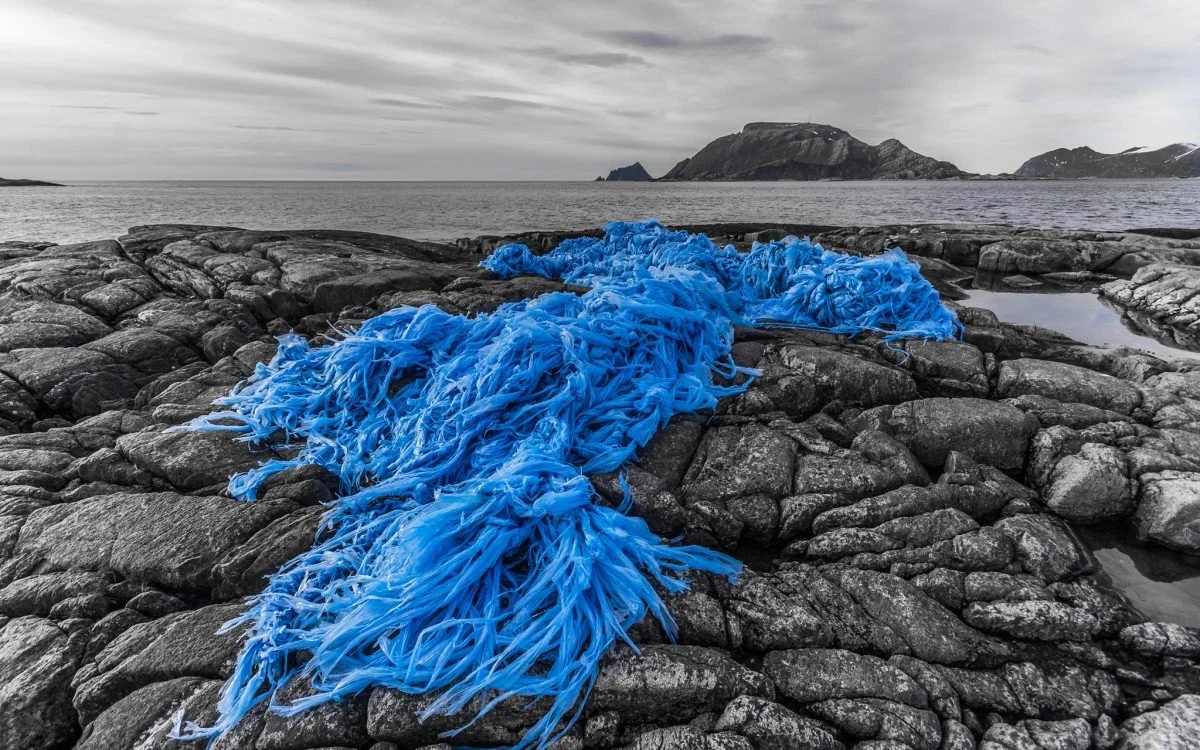
In the Norwegian context, the fisheries and aquaculture sector is responsible for the majority of plastic waste that ends up in the ocean. Photo: Bo Eide
The research project Shift-Plastics has identified the most important challenges that need to be addressed to reduce plastic waste from the fisheries and aquaculture sector.
In the Norwegian context, the fisheries and aquaculture sector is responsible for most of the plastic waste in the ocean. This pollution has serious consequences for nature and the environment. The Shift-Plastics project focuses on plastic products in the fisheries and aquaculture sector and investigates how we can achieve more sustainable and circular practices for the most problematic products.
By identifying the challenges that arise throughout the product's life cycle and proposing sustainable solutions to address them, the objectives are as follows:
develop better and more circular products
reduce plastic waste from the fisheries and aquaculture industry through better use of equipment and tools
ensure that products can be tracked and collected more efficiently and have sufficient quality to be reused or reused in new products
A report based on the project's first workshop has now been published, highlighting challenges and possible solutions to what must be described as a large and complex problem.
“There is potential for improvement in all phases of the plastic product's life cycle, from design to disposal,” says senior researcher and lead author of the report, Megan Palmer-Abbs at Nordland Research Institute .
– The sectors themselves are positive about overcoming the plastic waste problem, but there is a lack of an established, standardized, mandatory system available to everyone.
Cheap, but environmentally dangerous
In the summer of 2022, Shift-Plastics brought together a number of players from the diverse world of plastic products. Representatives from the entire value chain were represented: product developers, production and waste experts, recycling and disposal experts, and Researchers .
The participants agreed to divide the life cycle of plastic products into four main categories: 1. Development, design and production, 2. Use, 3. Collection and 4. Recycling and disposal.
– The challenges already begin with development, design and production, where much happens outside Norway's borders, says Palmer-Abbs.
– It is cheaper to import plastic products from, for example, Asia than to develop and produce the same products in Norway. But in many cases we have no control over the type of plastic used and its quality. Products with low plastic quality break down faster and turn into microplastics more quickly, she says.
Tough conditions
One of the proposed solutions from the researchers is to establish a new, interdisciplinary control body, which will check the quality of the plastic, ensure more environmentally friendly product design and ensure that the products are suitable for reuse or recycling.
– The new body should include expertise from the recycling and waste sector, where Norway has some of the world's leading experts, as well as implement Norwegian standards for circular design, says Palmer-Abbs.
When the products are first put into use, the main problem is that fragments or entire parts of the fishing gear or aquaculture equipment are lost. As a result, most of the plastic waste along the Norwegian coast comes from the fishing and aquaculture industry.
“The fisheries and aquaculture sectors take good care of their equipment, but struggle with harsh operating conditions. Improvements can be made that meet the needs of all stakeholders, both large and small,” says Palmer-Abbs.
At the workshop, it was discussed whether and how the equipment could be marked so that it could be found again. Electronic monitoring, colored threads in ropes, and the use of buoys were among the suggestions.
– In Norway, there are already several systems for collecting fishing gear and waste, but the challenges are still many, says Palmer-Abbs.
“Smaller vessels struggle with the capacity and resources to prioritize waste management. In addition, the Norwegian coast is very long and there are too few places to deposit the waste,” she says.
Long coast, few facilities
Getting waste management from the fisheries and aquaculture sector right requires collaboration between multiple institutions and sufficient funding.
“The waste management facilities along the coast are too few and lack both a standardized sorting approach and capacity,” says Palmer-Abbs.
Once the waste has been fished out and brought to port, the goal is reuse or recycling.
– There is some recycling, but far from enough. Here the challenges start already in the design of the product. Is it made so that recyclable parts can be easily separated from the rest? Is the plastic of sufficient quality to be used again? asks Palmer-Abbs.
Many possible products
Successful recycling remains a challenge even if the product has the properties needed to become part of other products.
– We need recycling on a much larger scale than today. Currently, there is a lack of will among key players, there is a lack of an effective return system, and waste management in the fisheries and aquaculture sector lacks coordination and consequences if it is not done, says Palmer-Abbs.
There are many good examples of successful product design, reuse and recycling. For example, fishing nets can become goal nets or dog leashes. Many types of plastic are reused in safety equipment for tunnels or in kayaks, garden furniture and many other products.
Needs better cooperation
Today, too much collected plastic waste ends up in landfills or incinerators. Many products have a complicated design, which makes it difficult to separate plastic from, for example, metal.
– As the situation stands today, not all fishermen are motivated to deliver their waste. Additional costs and a lack of waste facilities mean that this is given low priority in a busy everyday life, says Palmer-Abbs.
“The aquaculture sector has taken responsibility and we are now seeing improvements in collection and delivery for recycling. However, more needs to be done to really make a difference.”
Regulation works
To level the playing field for both small and large players in the fisheries and aquaculture sector, joint thinking and action are required. Players in both the public, private and voluntary sectors must talk to each other.
“To achieve this, we need regulations and appropriate mechanisms that encourage users to collect, sort and deliver waste, so that we can achieve significantly more recycling and create a more extensive secondary market for our waste,” says Palmer-Abbs, adding:
– Regulation seems to be a way that has worked previously in Norway.
The researcher calls for a robust public sector in collaboration between industry, research and the voluntary sector.
– The core goal must be solutions that both meet industry needs and improve the circularity of products, says Palmer-Abbs.
