
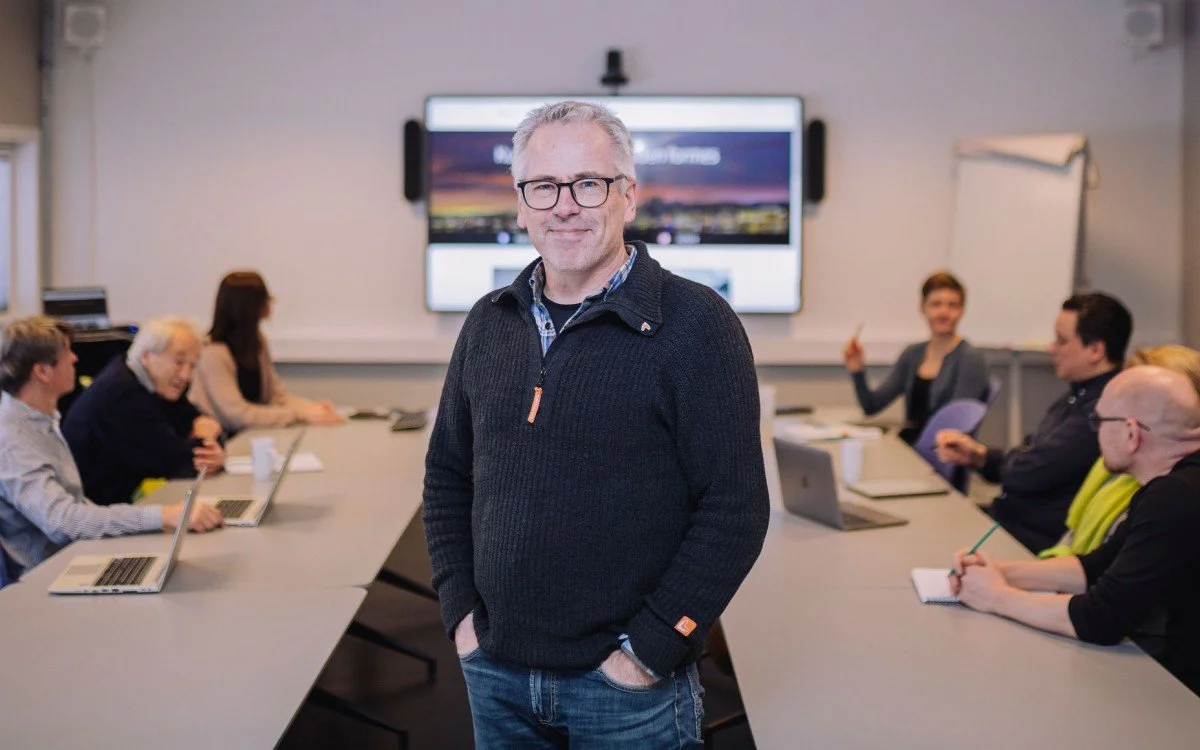
Nordlandsforskning's Trond Bliksvær is the project manager for HOUSYOUNG. Photo: Karoline OA Pettersen
Only four out of 52 applications were approved. The research project HOUSYOUNG with Nordland Research Institute in the management received support.
The Research Council's call for proposals "Collaborative project for better interaction for the best interests of vulnerable children and young people" received many applications, but only four were approved, each receiving 10 million kroner.
– It is very good to see that we are able to fight for funds even when the competition is at its greatest, says senior researcher Trond Bliksvær, who is project manager for HOUSYOUNG and Researcher 1 at Nordland Research Institute .
– And of course we are very happy to have the opportunity to conduct research on this exciting offer that a number of northern Norwegian municipalities have started and are collaborating on.
For HOUSYOUNG, it is about how Norwegian municipalities can ensure the inclusion of young people with complex needs by offering them their own housing. The housing offer in question is based on the so-called FOYER model.
– The FOYER model offers young people aged 16-25 years to rent their own homes in a housing community with others of the same age. Here they receive support from environmental therapists and the opportunity for community with other residents, says Bliksvær.
– The idea is to help the residents create a good adult life by giving them responsibility for themselves and their own home, while at the same time providing them with adult support they would not otherwise receive.
Network in the North
In Northern Norway and Trøndelag, seven municipalities have started a FOYER offer and several are showing interest in the model. HOUSYOUNG will follow these municipalities and develop knowledge about what it means for young people in vulnerable situations to have their own home and how the support system can use the housing model to include children and young people.
– The project team consists of: Researchers from Norway, Denmark and Scotland. In addition, both the Housing Bank and the State Administrator of Nordland are on the team, says Bliksvær.
– We also have with us all six municipalities in the Oppvekstløft i Nord network, the so-called OK6 network, consisting of Alta, Tromsø, Harstad, Narvik, Bodø and Mo i Rana.
Rewarding work
Both the Storting report "Bustadmeldinga" from March this year and the government's brand new strategy for child welfare institutions highlight housing measures for children and young people as important.
– In that sense, HOUSYOUNG is timely and fills important knowledge gaps. We know too little about what having your own home can mean for the lives of vulnerable young people who are on the threshold of independent adulthood, says Bliksvær.
– We will also investigate what having your own home can mean for young people with child welfare experience.
That precisely Nordland Research Institute is the project manager for such a project, is far from accidental.
– HOUSYOUNG combines both housing sociology, child welfare and other perspectives that we have worked extensively with here at the house. Intermunicipal cooperation is also a familiar concept for us, says Bliksvær.
– In addition, it is very rewarding to work together with the OK6 network, which really wants to achieve something for children and young people, he says.
Youth contributes
In addition to those working in the network, service providers and coordinators, the young people themselves will of course play an important role in the project.
“We will interview between 25 and 30 young people and follow them throughout the project period. The young people will also be asked to photograph everyday life in their homes,” says Bliksvær.
– In addition, we will establish an expert panel of young people who have had experience with the FOYER model or similar housing offers.
A questionnaire will also be sent out to all young people in Norway who live or have lived in FOYER housing.
