
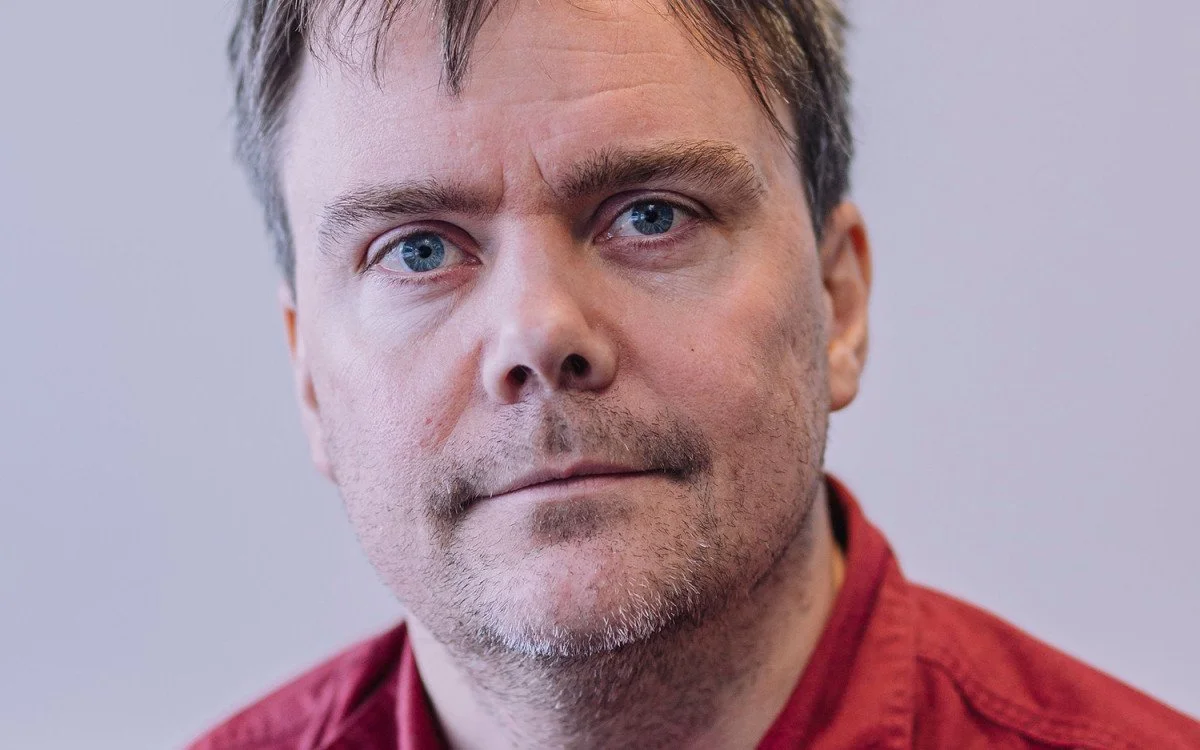
Senior researcher Stian Bragtvedt. Photo: Karoline OA Pettersen
What challenges arise when artificial intelligence is introduced in the workplace? A knowledge summary from Nordland Research Institute and Vestlandsforsking will help Norway be at the forefront of ethical and safe use of AI.
In a new project commissioned by the Ministry of Labour and Social Inclusion, researchers from Nordland Research Institute and Vestlandsforsking review existing knowledge about AI and algorithm-driven management in the workplace.
– The purpose is to give governments a basis for the healthy development of AI in working life and any changes to the relevant legislation, says Stian Bragtvedt, senior researcher at Nordland Research Institute and project manager for the knowledge summary.
AI and algorithm-driven management are expected to have a major impact on working life. Much is positive, but many also fear negative consequences. Excessive surveillance, the risk of discrimination, and less autonomy and job satisfaction are mentioned as potential threats to employees.
– It is important to have an overview of what we know about the effects of AI in working life, to ensure that Norway leads the way in the design and development of safe and ethical AI, says Bragtvedt.
AI and Norwegian tradition
There are many questions that will be examined in the knowledge summary. How do AI and algorithms affect work tasks and working conditions? What work environment challenges arise? What concerns and challenges do employees experience? And how are collective agreements, party collaboration, and elected representatives affected by AI?
– I look forward to finding out what research exists on AI and the Norwegian working life model, says Bragtvedt.
– There is a lot of research on AI and platform economy and algorithm-driven industries. When it comes to the Nordic model, with strong trade unions, institutional negotiations and collective wage formation, I am not sure if much research has been done, especially considering the effect of introducing AI on a large scale.
Norwegian and Nordic working life is Bragtvedt's own area of expertise. In addition, the project group includes Cheshta Arora, who is a senior researcher at Vestlandsforsking and, among other things, a researcher at KI and the green shift. Also on the team is Hilde G. Korneliussen, Researcher 1 and Research Leader at Vestlandsforsking, as well as a method expert and Researcher 1 at Nordland Research Institute , Helga Eggebø. Brigt Dale, who is research leader and Researcher 1 at Nordland Research Institute , quality assures the work of the group.
Fierce competition
Nordland Research Institute and Vestlandsforsking was awarded the assignment in fierce competition with ten strong research players. Nordland Research Institute His extensive experience with literature searches and research on the Norwegian working life model, combined with Vestlandsforsking's expertise in social science research at KI, was a good fit.
– It is gratifying to see that we can deliver research on a par with much larger players in Oslo, says Bragtvedt.
– This shows that institutes in the districts are not a career-wise backward place compared to larger players in central areas.
Director André Wallann Larsen is very pleased that Nordland Research Institute has been given this important mission.
– There is much evidence that artificial intelligence will fundamentally change working life, and we have already seen examples of how things can go wrong when AI is not used in a safe and ethical way, says Larsen.
– With our solid expertise in working life, we are now taking an important step into AI research, and this project makes Nordland Research Institute even better equipped for new tasks in this exciting and socially critical field, he says.
The project is scheduled to deliver its final report in April 2026.
