
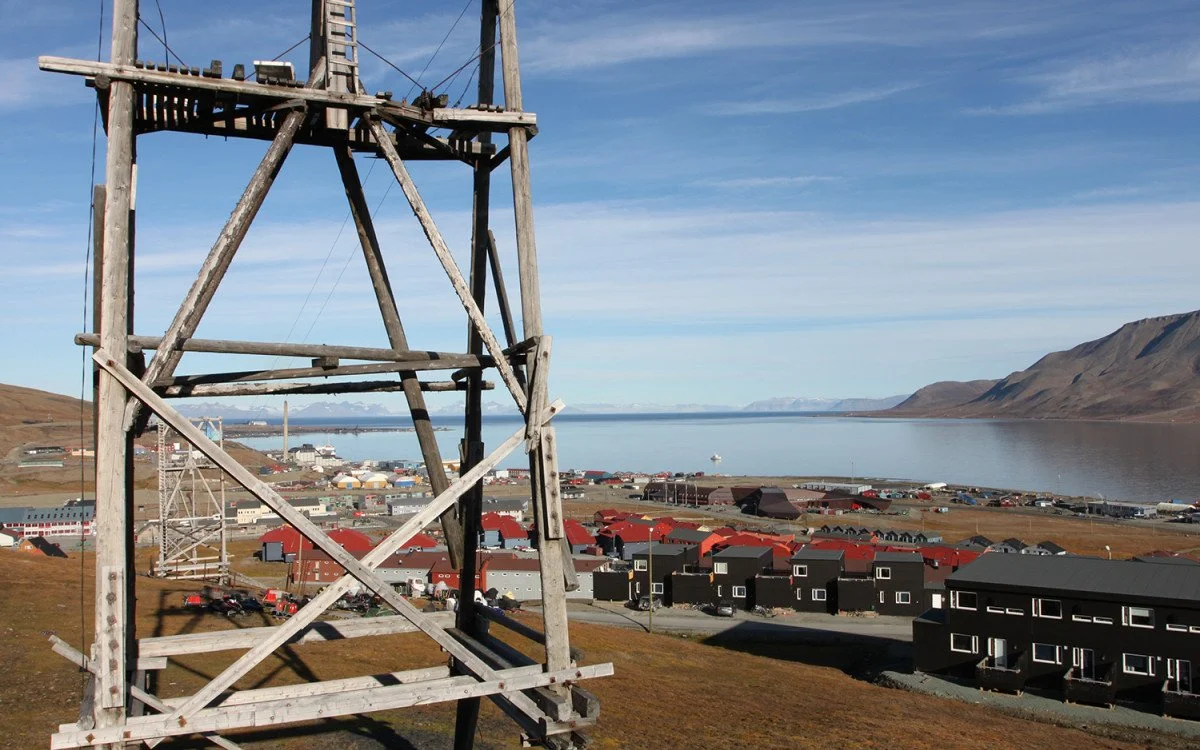
The cable car towers from the mining industry are a characteristic sight in Longyearbyen. Now many of them are threatened by thawing permafrost. Photo: Frank Andreassen / nordnorge.com
The permafrost in Longyearbyen is thawing faster than expected, threatening both infrastructure and cultural heritage. A new research project will develop tools to address the challenges.
Longyearbyen is a city built on permafrost. When the first buildings were erected, no one thought that the ground beneath them would one day thaw. But climate change is happening quickly and has changed the picture radically.
According to the Norwegian Meteorological Institute, permafrost can be defined as an area of ground where the temperature does not exceed zero degrees for at least two years. The ground above the permafrost thaws and freezes every summer, and is called the active layer.
– The active layer in Svalbard is getting deeper and deeper and the permafrost is retreating further and further into the soil. This creates challenges for both infrastructure, cultural heritage and public safety, says senior researcher Grete Hovelsrud at Nordland Research Institute .
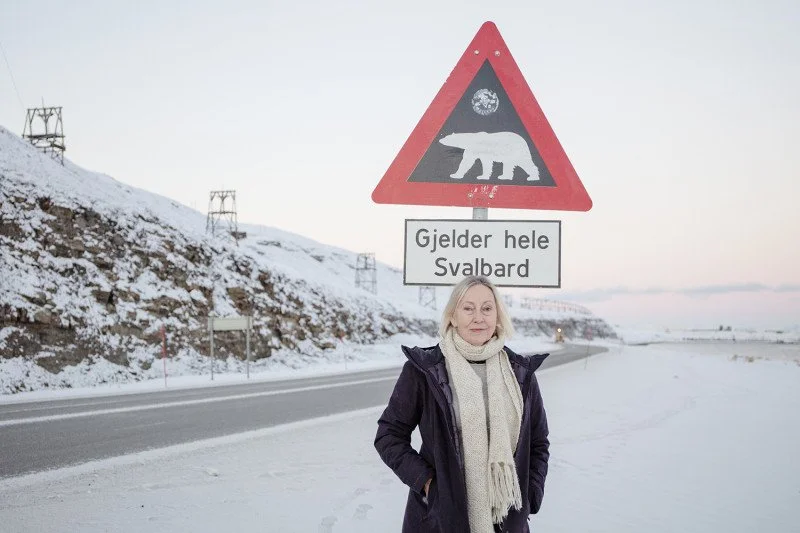
Grete Hovelsrud, researcher 1 at Nordland Research Institute , has been researching climate change and climate adaptation in Svalbard since the early 1980s. Photo: Marta Anna Løvberg
As the active layer deepens, buildings no longer stand and the risk of various types of landslides increases. Vegans in Longyearbyen have already suffered damage as a result of thawing permafrost.
– Parts of the road on one side of Longyeardalen in particular are exposed, as the ground beneath it thaws in different ways, says Hovelsrud.
Map endangered cultural heritage
Researchers from the University Centre in Svalbard (UNIS) have been monitoring the state of the permafrost in Longyearbyen for several years. A new research project called ThawingLYR, led by permafrost experts Hanne Christiansen and Marius Jonassen from UNIS, is now looking at how to manage the thawing of permafrost and the increasing risk to the city's critical infrastructure, cultural heritage and unstable mountain slopes.
– The project looks at how the thawing of the permafrost affects different areas in Longyearbyen. The researchers are using instrumentation, seismic equipment and camera technology to map where the thawing is happening fastest, says Hovelsrud.
Nordland Research Institute is also on the team. In addition to Hovelsrud, the institute is fielding senior researchers Tiril Vold Hansen and Helena Gonzales Lindberg.
– We are working closely with local stakeholders to identify which cultural heritage and infrastructure are most at risk, says Hovelsrud.
"It is important to find out where we should implement measures first. For example, we will look at the characteristic cable car trestles, which cost a lot of money to secure. There are around 200 of them, and we need to find out which of them is most at risk," she says.
Need for adaptation and preparedness
Climate change in the Arctic is happening twice as fast as in the rest of the world, something that Longyearbyen has already felt. Safety measures have been initiated, including at Sukkertoppen and along the Longyear River, which runs right through the city.
– In Longyearbyen, we are already seeing the effects of the receding permafrost. Drilling has been done all the way down to the bedrock to secure important structures, and cooling systems have been installed under certain buildings, such as the Svalbard store, says Hovelsrud.
The goal of the new project is to create a permafrost response system that can be used by authorities, businesses and local communities. This system will provide easily accessible information on risk, land use planning and future adaptation needs.
– In order to successfully develop such a system, it is important to involve local stakeholders in the design. The goal is to find a system that is both easy to use and that everyone can benefit from, says Hovelsrud.
