
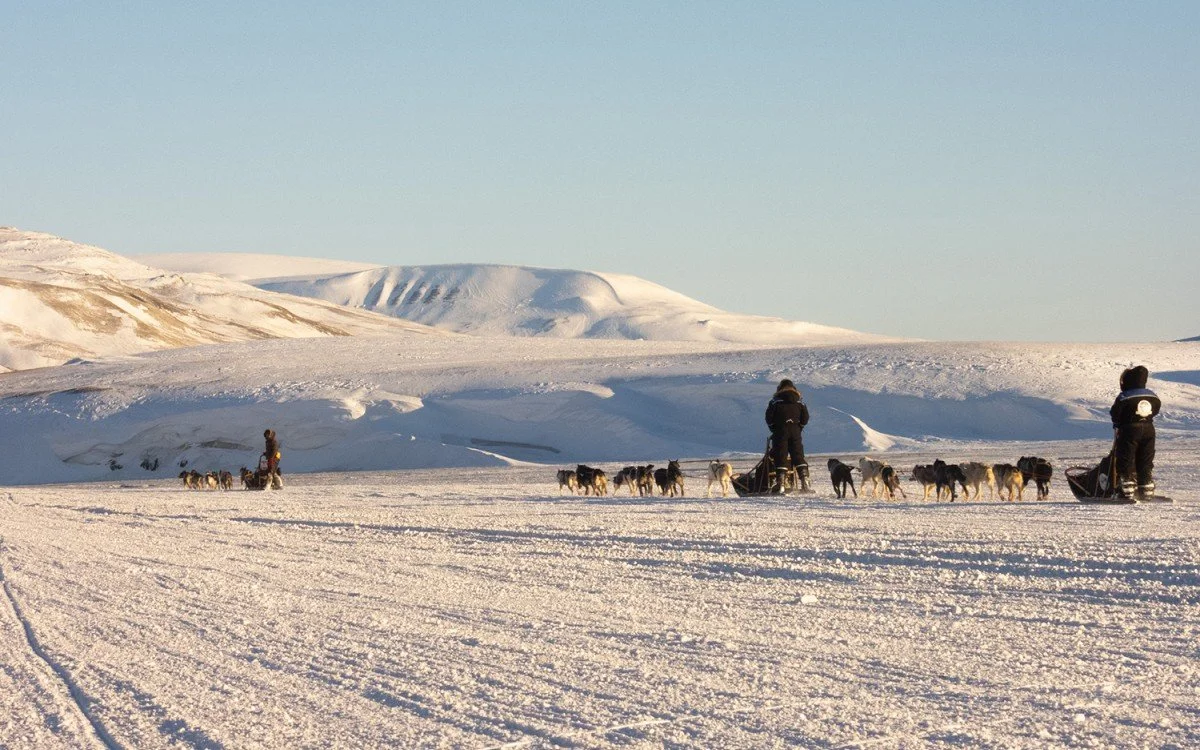
Dog sledding is one of the activities that faces challenges as the climate in Svalbard changes. Photo: Håkon Daae Brenshom / Visit Svalbard / nordnorge.com
The tourism industry in Svalbard can look forward to a bright future, even though climate change, stricter regulations and a tougher market create a number of challenges.
This is shown by research conducted through the project "Sustainable tourism in Svalbard - an art of balance", which investigates precisely how the tourism industry can create new and sustainable solutions in the face of a new reality.
Svalbard is definitely changing. The archipelago is experiencing a sharp increase in both temperature and precipitation.
“The winters have already become significantly shorter and milder. Especially in the lowlands, the snow comes later and melts earlier than before,” says Grete Hovelsrud, researcher 1 at Nordland Research Institute and professor at Nord University.
– More rain in the winter increases the risk of flooding and avalanches, which is problematic for snowmobilers, dog sledders and skiers, she says.
Solutions for the future
Climate change is one of the reasons why the authorities have adopted stricter regulations on tourism, field trips and other travel activities in Svalbard. The recently revised Svalbard Environmental Act, which aims to maintain a virtually untouched environment in the vulnerable nature, also makes the tourism industry's room for maneuver narrow.
In addition, the industry must take into account the residents of Longyearbyen. Although the average person views tourism relatively positively, many are skeptical about, for example, too many visitors at once.
“This is a problem, especially in the summer. Many also think that tourism leads to wear and tear, disruption and littering,” says Hovelsrud.
– On the other hand, residents recognize that tourism has contributed to better flight options, more restaurants and shops, and greater development opportunities.
With all these challenges as a backdrop, Balancing Act organized a workshop in Longyearbyen last December, where solutions for the future of tourism were discussed. The workshop was attended by 24 tourism stakeholders and seven Researchers .
Were any suggestions for solutions found? To the highest degree.
New times, new opportunities
Following the workshop, the project group has developed the document "The Opportunity Space for Future Tourism Development in Svalbard". It presents a number of measures that can help tourism into a promising future.
– Although there is great uncertainty associated with tourism outside Longyearbyen, there are great opportunities for both further developing existing tourism products and creating new ones in the Longyearbyen and Isfjorden area, says Halvor Dannevig, who is a leading senior researcher and research manager at Vestlandsforsking.
Decreasing sea ice is bringing walruses, seals and polar bears closer to Longyearbyen, creating potential for wildlife experiences. Whale watching and fishing are also being highlighted as possible activities to pursue. The increasing wildlife is also making camping less appealing, so the need for safe and unique accommodations will increase.
– In addition, we propose several urban experiences that play on the Arctic nature and the unique Svalbard feeling. Concepts such as “Taste of Svalbard” and “Borrow a local” are good ideas in this genre, says Dannevig.
Want a longer stay
It is undeniable that getting to Svalbard is rarely healthy for the environment. Both air travel and cruise traffic have significant carbon footprints. When it is nevertheless decided that people will live on Svalbard and that the tourism industry is an important part of the economic base, air traffic must be part of the picture. The goal is nevertheless to reduce the number of aircraft wings.
– If we are to achieve this while maintaining value creation, the length of stay of tourists must be increased, says Dannevig.
– To achieve this, the participants at the workshop suggest, among other things, that package holidays have a minimum length of stay of 5-6 days. We also believe that there should be greater requirements for the duration of stay in high season than in low season.
The project group is also launching proposals for better cooperation between tourism stakeholders, so that trips are filled with more content. And what about a "Svalbard card", which gives discounts from the fifth activity booked?
– We also recommend that the Svalbard Museum and UNIS come forward with programs that are offered to all tourists, so that both the length of stay and the level of knowledge increase, says Dannevig.
Considerate visitors
Knowledge is an important keyword. Visitors to Svalbard should be aware that they are in one of the areas in the world most affected by climate change.
– This knowledge can raise awareness about climate and environmental changes in the Arctic and contribute to behavioral changes among tourists, says Grete Hovelsrud.
On the Pacific island of Palau, they have introduced a declaration that tourists sign, which commits them to traceless travel and considerate behavior towards both nature and local communities.
“What about a similar scheme in Svalbard?” asks Hovelsrud.
Regarding residents' concerns about tourist congestion during cruise ship calls, the project group recommends that the number of cruise ships be spread out more evenly. Svalbard's many guides are also encouraged to talk to each other so that they do not bring their tourist groups to the same place at the same time.
Overall, the researchers in the project believe that the measures that have been developed in collaboration between Researchers and the tourism industry, shows that there is a future for those who make a living from tourism in Longyearbyen and the surrounding area.
– We believe that there is significant potential for creating sustainable tourism in Svalbard in the future, says Hovelsrud.
