
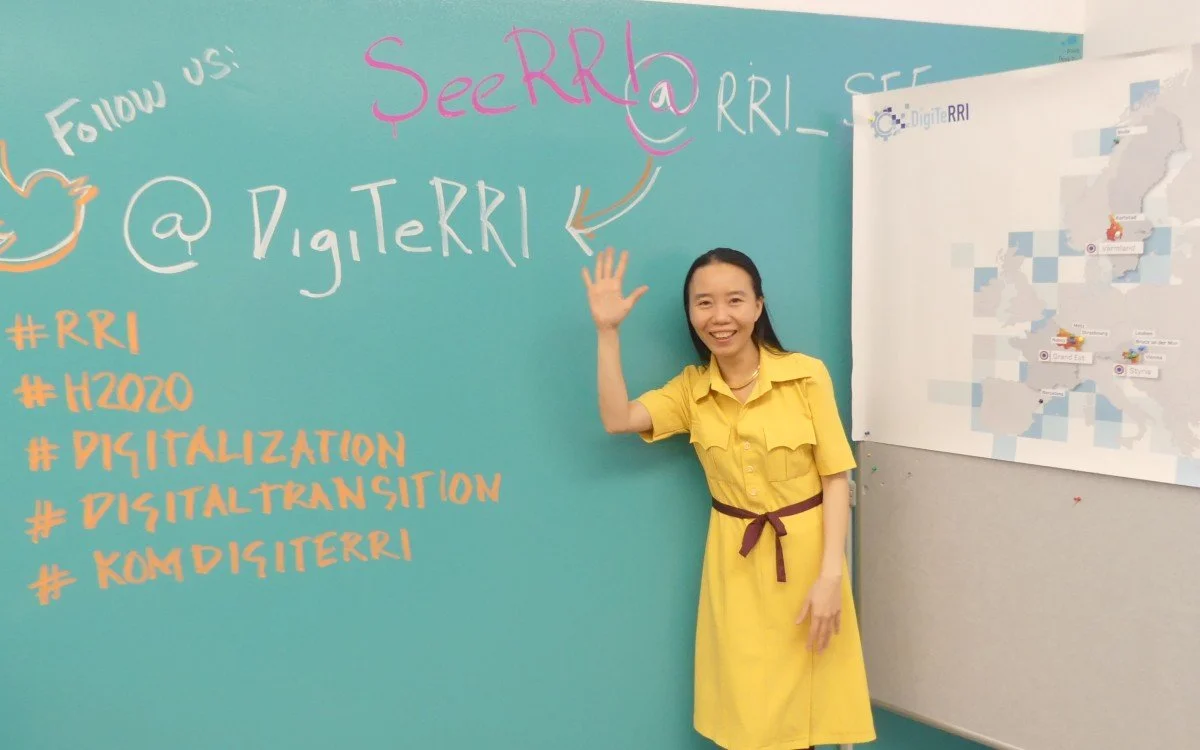
Vietnamese researcher Nhien Nguyen opened the door to the EU for Nordland Research Institute Photo: Mario Magaña
When Nhien Nguyen started Nordland Research Institute In 2017, the institute did not have a single EU project. Now that she is cleaning the office, the number is ten.
A research institute is used to people coming and going. Some stay for a long time, others only for a short time. Not everyone manages to write their name into the history books, but when Nhien Nguyen now announces her transfer to NTNU after seven years in the service of Nordlandsforskning, it is with certainty that she has left a lasting mark.
– Nhien has meant a lot to Nordland Research Institute "She showed us that it was possible for an institute like ours to get EU projects," says CEO Iselin Marstrander.
But what exactly are these EU projects? Why are they so important?
Slow start
The allocation of research funds from the EU is based on fierce competition, with scientific quality being given decisive importance. When Marstrander started at Nordland Research Institute In 2014, Norway was seriously realizing the importance of being competitive in this company.
– Getting involved in the EU was important in order to get more funding opportunities for our research. Getting EU projects was linked to quality and prestige, and not least, research projects in the EU would provide access to exciting academic environments and networks, she says.
The management initiated several processes to make Nordland Research Institute able to compete for European research funding. At the same time, there was increasing focus on EU research programmes both in the Research Council, the Regional Research Fund and in the region at large.
– In the years 2014, 2015 and 2016, we worked a lot on applications, but the threshold was high and we somehow couldn't quite get it going, says Marstrander.
Then Nhien Nguyen appeared. A 34-year-old researcher from Vietnam, who had not yet completed her doctorate. She had experience from industrial companies, education from prestigious universities and a number of other personal qualities that made her well suited to all phases of project work.
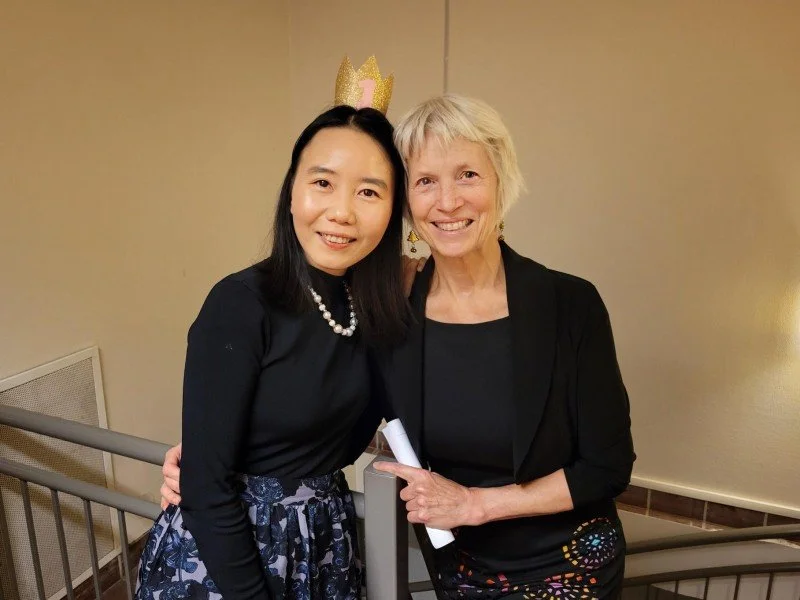
Nhien Nguyen and Iselin Marstrander at the end of the journey. The Vietnamese researcher is now leaving Nordland Research Institute Photo: Marta Anna Løvberg
Moreover, the lady was quite poor at Norwegian. This made it natural for her to turn her gaze outwards towards Europe. The events that followed are quite remarkable.
Hairy goals
With Nordland Research Institute and the Research Council, and financial support from Nordland's EU network and their guru Eivind Sommerseth, Nhien traveled to Brussels, where the EU headquarters are located. Here, a so-called "brokerage event" took place, a gathering of Researchers and business people who are looking for partners for their projects.
– I attended six speed dates in one hour. One of them was a coordinator from Austria who needed an entrepreneur on the team. I had brought up Nordland Research Institute in the "small or medium-sized business" category, so she thought we were the type of company she was looking for, says Nhien.
– When she finally understood that I was a social scientist, I had already convinced her that she needed me on the team, Nhien smiles.
And then – hallelujah! – it was Nordland Research Institute as a partner in its very first EU project: IAMRRI.
Back in Norway, the enterprising Vietnamese was still not completely satisfied. It wasn't enough to just be a partner, Nhien wanted Nordland Research Institute was to be the coordinator, i.e. the main person responsible for an EU project.
For a research institute with just over 40 employees, that's a tall order. In fact, extremely tall. The job of coordinator of something as notoriously complex as an EU project is incredibly labor-intensive and just really, really difficult.
That an inexperienced 35-year-old would be the actual coordinator? Unthinkable.
But Nhien had made up his mind.
Cold Spaniards on Bodø visit
The trip went again to Brussels.
“This time, I was the one looking for partners for my project. Over 20 institutions expressed interest. I selected enough to form a consortium,” says Nhien.
The Research Council, led by Kristin Eikeland, saw potential for success. They hired an expert on EU projects to prepare Nhien for the role of coordinator. Over the course of a few hectic months, a project application was prepared.
– The Brussels trip took place in January, in February we officially formed a consortium, in March we met for the first time in Barcelona and in April the application was submitted, summarizes Nhien.
– In July the answer came. We got support!
In January 2019, the project had its kick-off meeting in Bodø. Tented Spaniards hunted for the Northern Lights in a snowstorm, meat was roasted underground in a Stone Age village, and the SeeRRI project saw the light of day in the middle of the Dark Ages. In the driver's seat was Nhien Nguyen.
“If I had known how much work it would be, I would never have started,” she says.
Transferable knowledge
The next three years were mostly about SeeRRI. Nhien received valuable help from Nordland Research Institute -nestors Åge Mariussen and Jarle Løvland. NHO Nordland, with the aforementioned Eivind Sommerseth and Anders Paulsen, were central to the work. Liv Rask Sørensen, Dag Bastholm and Vivian Aira from Nordland County Municipality also worked diligently on the project. In addition, the Danish labor union Jens Ørding Hansen was recruited. Together with 12 partners from five countries in Europe, Nhien and co developed a methodology that helps European regions plan in a responsible, inclusive and sustainable way.
– The SeeRRI method emphasizes the involvement of all relevant actors and downplays political disagreements that can hinder progression, says Nhien.
– It's about doing things together, both defining the challenges and designing a strategy to solve them.
SeeRRI was so successful that it paved the way for a sister project: DigiTeRRI. This EU project, which ran from 2020 to 2022, helped traditional industry transition into the digital age in a responsible way.
– The knowledge from SeeRRI was used in a new setting and came in handy here too, summarizes Nhien.
After busy years with IAMRRI, SeeRRI and DigiTeRRI, was it perhaps time for a break? Of course not. The biggest project of them all was already underway.
A numerous partnership
Through extensive collaboration with European partners, Nhien Nguyen's network had become large and rich. Somewhere along the way, she met someone who worked for Gate21, a Danish partnership focused on green transition. In 2018, he made contact.
“He was looking for a coordinator for a large EU project. We wanted to be part of the consortium, but not have the main responsibility,” says Nhien.
The right one was finally found in Germany. Together with colleague Bjarne Lindeløv, Nhien went to Freiburg to negotiate a budget. It turned out to be big, very big.
27 partners from six countries in Europe joined forces on the CityLoops project, which boasted a total budget of NOK 103 million. Nordland Research Institute led one of the work packages. But as the giant project neared its end in 2023, Nhien's career in Nordland Research Institute over.
– It was time to move on. I have learned a huge amount, especially since I had to learn everything from scratch. Nordland Research Institute was my first place of work after my PhD. Now I want to try something different, I want to teach and guide the future Researchers , she says.
And there will be more.
Nhien Nguyen has been crucial in Nordlandsforskning's EU history, but not unique. Thanks to her targeted and strategic efforts, several Researchers gained the expertise needed to flourish on the European stage. This has resulted in projects such as Provide, Tipping+, Prep4Blue, FACE-IT and – not least – EmpowerUs where Nordland Research Institute , led by Maiken Bjørkan, is the coordinator.
– Nordland Research Institute has now had many years of success in the EU and we have ambitions that 25 percent of our turnover will be international revenue in the future, says Iselin Marstrander.
– The institute is in a completely different position in 2024 than in 2017 and has more skilled people Researchers who are successful in the EU competition for research funding. We actually recently received funding for a new EU project called ArcSolution, and there will be more! she promises.
