

Authors Lea Louise Videt and Trond Bliksvær. Photo: Thoralf Fagertun
A recent study from Nordland Research Institute and Nord University show that municipal rental housing in small and sparsely populated municipalities fulfill completely different functions than in cities.
174 of Norway's 356 municipalities, or 49 percent, have fewer than 5,000 inhabitants.
– These municipalities should offer the same public welfare services as large municipalities, also when it comes to municipal housing, says Trond Bliksvær, senior researcher at Nordland Research Institute .
– But small municipalities differ from larger ones in terms of allocation practices, administration and housing policy, he says.
Together with Lea Louise Videt, who is also a researcher at Nordland Research Institute , and Asgeir Solstad, associate professor at Nord University, he has written the chapter "Municipal housing in rural municipalities and sparsely populated areas. With examples from a case study in northern Norwegian district municipalities" in the anthology "Welfare state housing: Municipal rental housing in Norway".
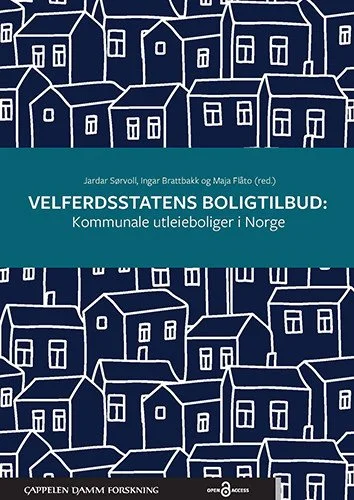
The chapter is based on a nationwide survey and interviews conducted in six northern Norwegian municipalities, and reveals large variations in the role that municipal rental housing can play in the overall range of offers and services in different municipalities.
Three different types of municipalities
The researchers have identified three different types of district municipalities, which they believe illustrate some of the breadth of roles in municipal housing provision:
1. The small municipality
Small municipalities, often with fewer than 2,000 inhabitants, have a large geographical area and a limited administrative apparatus. Here, municipal housing is used flexibly, both for employees, refugees and residents with temporary needs. Allocation is often made without a means test, and decisions are made by individuals or technical agencies. At the same time, these municipalities lack social housing plans, and the housing is often characterized by decay and lack of maintenance.
– We see that small municipalities have great flexibility, but also low capacity for planning and maintenance. This presents challenges for both residents and the municipalities themselves, says Bliksvær.
– In the smallest municipalities, municipal housing is often used to house employees of the municipality or local businesses, rather than for disadvantaged people, he says.
2. Merged district municipalities
This group consists of merged municipalities. They often have a varied housing stock, with different standards and geographical distribution. Many homes are located peripherally, far from services and jobs. The municipalities struggle to coordinate operations, maintenance and allocation, and the housing market functions poorly. Refugees and people with substance abuse and psychiatric problems make up a large part of the tenants.
– Merged municipalities often have great pressure on the housing sector, but lack comprehensive plans and sufficient capacity to meet the needs, says Bliksvær.
3. Medium-sized municipalities with urban features
These municipalities have an urban center and a large surrounding area. Here, the housing shortage is great, and only the most disadvantaged receive municipal housing. Many tenants have complex problems, and the municipality experiences that the housing sector is becoming a collection point for failures in other parts of the welfare system. There is little throughput, and many remain living in municipal housing indefinitely.
– We see that medium-sized municipalities have challenges similar to those we see in big cities, with heavy housing social issues and a pressured housing market, says Bliksvær.
Lack of tools and resources
A common problem in all types of municipalities is the deterioration of the municipal housing stock. Many homes are of low standard, and the municipalities lack funds for upgrading. At the same time, there is great variation in how rents are set and how housing is allocated. Several municipalities use historical rent levels, while others operate with market rents, often without clear guidelines.
– It is important to understand that the housing sector in small municipalities is not only about meeting the needs of social housing target groups, but also about securing labor and local development, says Bliksvær.
The chapter concludes that there is a need for more knowledge about how the housing sector functions in the districts. The new Housing Act and the Housing Report give municipalities greater responsibility, which requires that policy be adapted to local conditions.
“Municipalities must be given the tools and resources to develop housing provision based on their own needs. This requires both better planning and more targeted support from government actors,” says Bliksvær.
