
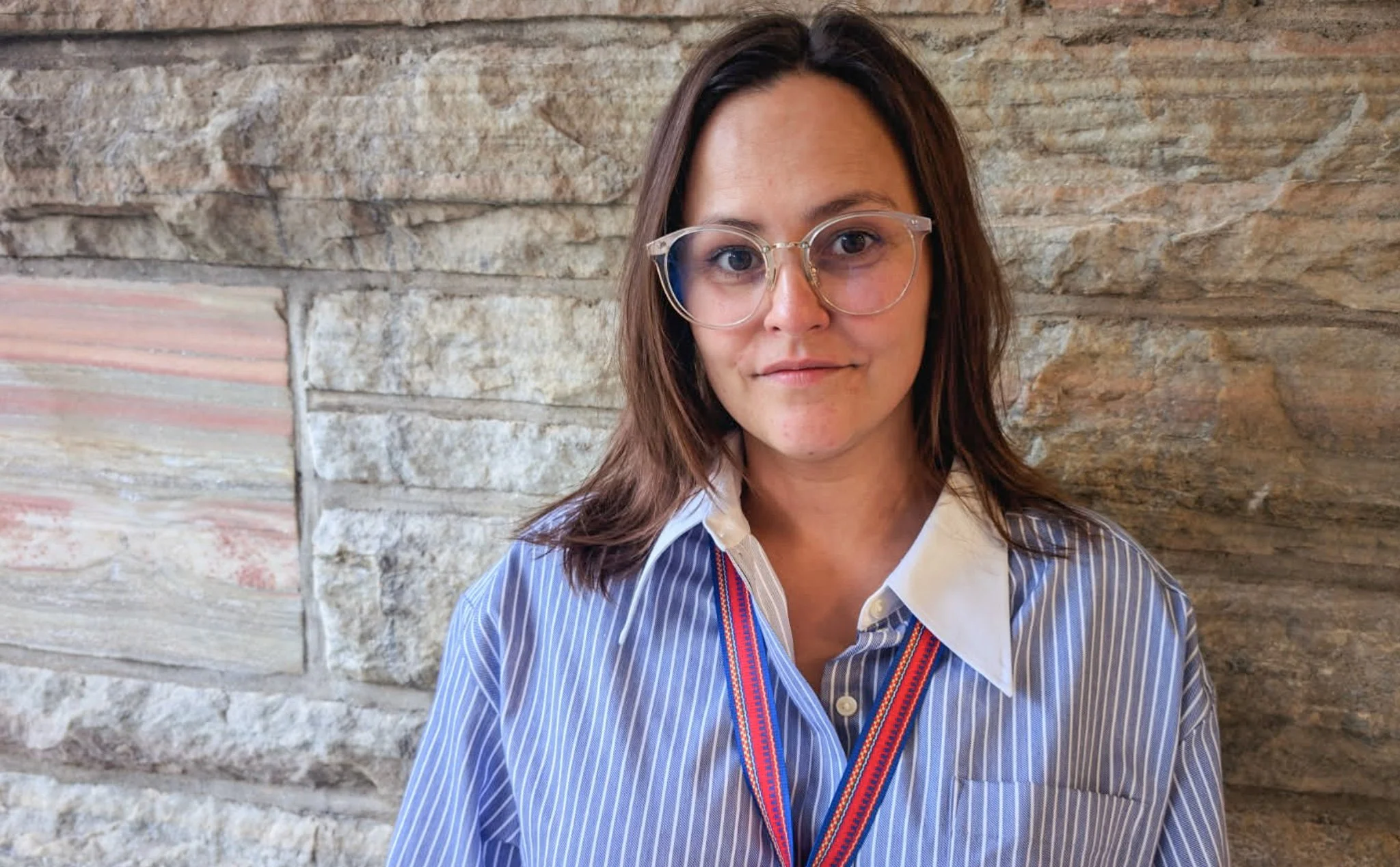
Welcome to debate. Camilla Johansen at the Salten Emergency Department welcomes a debate about coercion in psychiatry. Photo: Nordlandssykehuset
Strict rules mean that patients who are admitted under duress do not necessarily receive treatment for the illness they are admitted for. “My son was left in a nightmare for far too long,” says a father who has experienced the consequences on his body.
Text: Tarjei Abelsen
– Yes, you can be involuntarily hospitalized without being forcibly medicated. The regulations are complicated and strict, says Camilla Johansen, head of the Salten Emergency Department at Nordlandssykehuset.
The consequence for some patients may be that necessary treatment comes too late.
– For some, it can cause irreparable damage if we do not initiate treatment as soon as we see the need, says Johansen.
When Lytring invites you to a debate about coercion in psychiatry on August 27th at Stormen Library, Johansen brings experiences from a working life where the question of coercion constantly arises.
Doesn't hang on the handle
To Lytring Also coming is a father who has experienced firsthand how today's legislation can contribute to unnecessary suffering.
His son was forcibly hospitalized with severe psychosis, but was still not medicated. Only after being awake for eight days, and there was a risk to his life and health, did he receive emergency forced medication.
– For more than a week, my son lived in a crazy nightmare and thought he was going to die. It was not possible to get in touch with him, and he was declared "Not competent to consent". Nevertheless, he was not medicated, and the reason was that he did not consent. Such regulations are not up for grabs, says the father.
Johansen believes that such experiences show why there is a need for a broader discussion about when coercion is actually necessary.
– I am glad that Lytring raises a debate about this.
Increase in coercion
Internal figures from Nordland Hospital show a sharp increase in involuntary admissions. In the period 2015–2017, an average of 326 patients were involuntarily admitted each year. In the period 2021–2025, the average was 595, an increase of 82 percent.
Johansen believes the increase must be seen in the context of patients being sicker, while preventive and outpatient services have been scaled back.
– People are sicker, and substance abuse has increased enormously. Preventive services were scaled down during Covid and never came back. Those who come to us are sicker, and that makes treatment more difficult, she says.
She believes the consequence could be that people who need help only receive it when the situation has become serious.
– There are many who are suffering and sick, but you can't help them until it's very far gone.
When is coercion necessary?
Johansen believes it is right that coercion in mental health care is strictly regulated. At the same time, she calls for a debate about the situations in which coercion may actually be necessary.
– When is coercion appropriate? It is an ethical question, as much as a medical question.
It is a question without a simple answer. Therefore, I invite Lytring for debate.
In addition to Johansen and the relative's father, researcher Esben Olesen at Nord University and Nordland Research Institute , Tore Riedl, head of the control commission at Nordlandssykehuset, and county physician Morten Sundnes, State Administrator. Anki Gerhardsen, editor-in-chief of Lytring will lead the debate.