
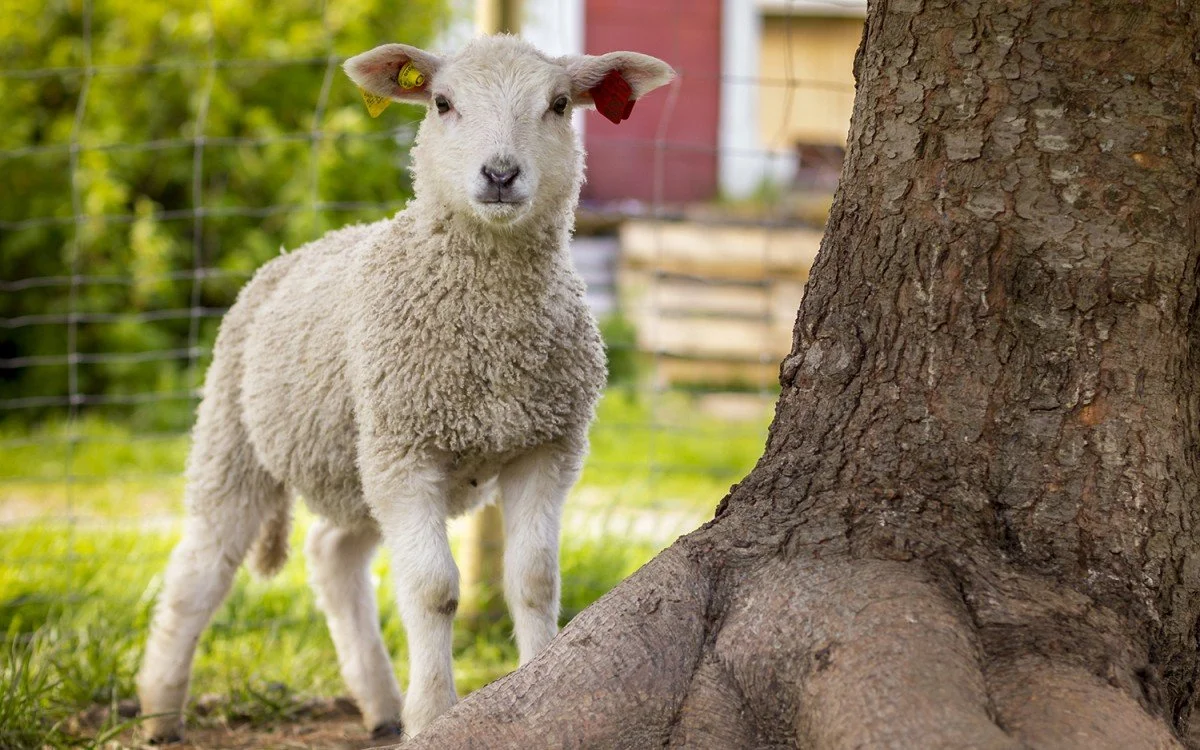
Nordland has a rangeland particularly suitable for grazing animals, but local food production faces many obstacles. Photo: Christian Borlongan / nordnorge.com
Producers and processors of local food would like to offer their products to the market, but are hindered by a policy that prioritizes large-scale production.
This is revealed in " Report from the Work Workshop on local food production in Salten, now and in the future – opportunities and barriers ". Earlier this fall, a collection of Researchers from Nordland Research Institute a wide range of players in Salten's local food industry to a workshop on local food production and local food systems.
Representatives from interest groups and municipal and regional administrations were present. There were also fishermen, grazing industries, berry and vegetable farmers and processors of local food. And it turned out that the vast majority are struggling to adapt to the sales systems.
– Everyone experiences the same thing. Demands for volume and efficiency come at the expense of quality and the room for maneuver to use local resources, says senior researcher Camilla Risvoll.
She points out that local conditions, such as topography and short growing seasons, in many cases make volume production unsuitable.
– At the same time, Salten and Nordland have great potential when it comes to food production. The open fields here are particularly suitable for grazing animals, thanks to rich soil and plant diversity, says Risvoll.
– And historically, there have been far more grazing animals in the mountains than there are today.
More profitable to import
Looking ahead, local food stakeholders in Salten are convinced that food security and preparedness will become increasingly important. They predict that global trends such as climate change and war will force politicians to prioritize food preparedness, self-sufficiency and climate adaptation in food production. Already today, an overarching goal in national policy is to increase the proportion of Norwegian-produced food.
– But today's policy is to decouple local resources, says senior researcher Bjørn Vidar Vangelsten. – It is more profitable to import than to use local resources.
– The idea has been to ensure self-sufficiency by making Norwegian agriculture internationally competitive. But that is not possible. We have a climate and a topography that make it impossible to produce food as efficiently as, for example, Germany, says Vangelsten.
Focus on price
The strict requirements to produce as much as possible in the shortest possible time mean that local food producers are constantly falling short. Many farms are closing down. The participants at the workshop highlighted the need for structural changes and for knowledge about local food, local production methods and food culture to be included to a greater extent when decisions are made.
– Those who make decisions today do not know local conditions and practices well enough. Farmers, fishermen and reindeer herders have adapted their work through knowledge of the landscape and the fjord, and they know how to work with the natural resource base. They have important knowledge about local food production that will be important for our preparedness and food security in the future, says Risvoll.
– Local food producers want a food policy that provides better economic framework conditions and wage growth for producers, based on sustainable production that does not primarily focus on volume, but on an adapted use of local resources, she says.
Another focus that affects the local food industry is the bottom line. Since local food is more expensive to produce, the price is higher than mass-produced foods. When interest rates rise and inflation sets in, the consequences are devastating.
– When people's finances become less affordable, local food is the first thing they stop buying, says Vangelsten.
– Today, being a local food producer is very vulnerable. The focus of grocery chains is almost exclusively on price and a myth has been created that food is so expensive in Norway. It is not, we spend a fairly low proportion of our salary on food, says Vangelsten.
School curriculum
It is both a hope and an expectation among food producers that knowledge about food and food production will increase among the population.
– They want to focus on the use of Norwegian food and the importance of choosing Norwegian products in season. This is important as a contrast to how food chains market and emphasize price over quality and the natural annual cycle, says Risvoll.
– Many people want knowledge about food to be included in the school curriculum to a greater extent, so that children and young people today understand where their food comes from and why it is important to have food production in the North. After all, the students are the ones who will decide in the future, she says.
