
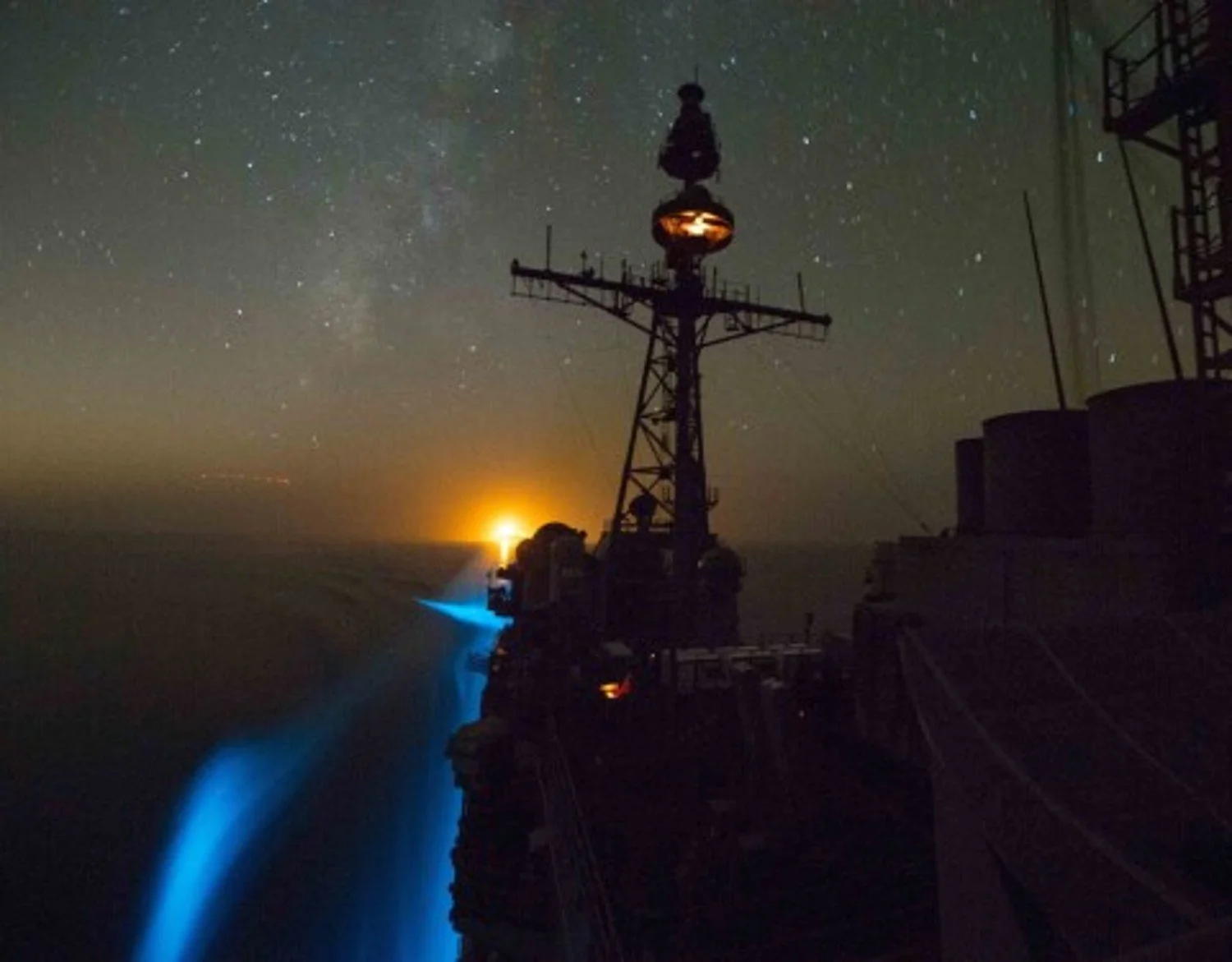
The experience of support from the shipping company was important to the seafarers who participated in the survey. Photo: Petty Officer 3rd Class Kelsey H / US Department of Defense Current Photos
When international maritime researchers recently met, one question emerged as important to everyone: How are the seafarers in the middle of the war zone in the Persian Gulf and Hormuz actually doing at work?
A team of Researchers from Norway, Canada, Croatia, Portugal and Sweden on the team thus got started.
– No one had heard of anyone investigating this, and so we decided to investigate it ourselves, says Birgit Pauksztat at Nordland Research Institute .
The case was first published on forskning.no .
Old recipe, new use
The researchers quickly developed a questionnaire, based on previous research conducted during the Covid pandemic.
The researchers wanted to know what everyday work was actually like for those on board, what challenges they faced, what helped them, and what support they needed.
Normally, such a study would take a long time. This time, the researchers spent about ten days preparing the study and two weeks getting an overview of the results. The first results were presented on Seafarers' Day on June 25.
From a normal workday to fear of being hit
The answers the researchers received primarily show how different the experiences of the seafarers in the area had been.
– The most surprising thing was how much variation there was in how the seafarers experienced the situation, says Pauksztat.
Some describe a situation that feels relatively normal. They go about their normal work tasks even though they are aware of rockets and attacks taking place not too far away.
Others describe a completely different reality.
The fear of being sent through the Strait of Hormuz
– They see missiles over the ship every day. They have experienced ships nearby being attacked. And they don't know if their own ship will be next. They write that they are terrified, says Pauksztat.
For many, it was the fear of being sent through the Strait of Hormuz that caused concern.
– Some experienced pressure from the shipping company to undertake voyages that they themselves perceived as dangerous. Some say that they felt they had no real choice. They were very afraid of this, says the researcher.
– Some tried to go through, were attacked and had to turn back, she explains about the drama outside Iran.
Many considerations to take into account when using the method
The researchers deliberately chose open-ended questions to elicit the experiences and perspectives of seafarers working in the region.
It was also important to take language barriers into account.
– We had to find a low-threshold way to do it. Many people may not have English as their first language. That's why we used open-ended questions. We also used questions where we asked them to write three words about how it felt for them, and what the situation was like on board, says Pauksztat.
Not unusual for a low response rate among seafarers
The survey was sent out via international maritime organisations, trade unions, shipping companies and charities. The researchers also contacted shipping companies they knew had ships in the area directly. They also used personal networks – people who knew people who had been to the region.
233 people opened the survey. Of these, 82 ultimately provided usable responses.
Pauksztat says that low response rates are not unusual when reaching seafarers at sea. They are often relatively inaccessible. At the same time, she believes there may be several possible explanations for why it was extra challenging this time.
A rare and honest insight into everyday life
Poor internet connectivity was one possible explanation. Satellite connectivity can be expensive, and not all shipping companies provide unlimited free internet access to crew.
Furthermore, the responses showed that ships in the area often experienced unstable or slow connections and interruptions in internet connections as a result of the conflict.
The researchers had also heard that some shipping companies or organizations did not want the seafarers to speak out.
In addition, Pauksztat speculates whether fear may have played a role.
– It could also be that people were afraid. What if someone wants to look at my mobile phone and what I have done online, and it can be used against me? There was a feeling that “anything can happen” if the vessel is taken by the authorities.
Despite the low response rate, the results still provided a rare and honest insight into the everyday lives of civilian workers in the midst of a major geopolitical conflict.
When you are dependent on the shipping company
The responses indicate that support from the shipping company can be crucial when the seafarers themselves have limited ability to influence what happens. The relationship with the shipping company was a recurring theme in the responses.
– The difference between other civilians and seafarers is that as a seafarer you are much more dependent on the shipping company. If you are a private person on land, you can pack up and leave with your family. If you are on board a ship, it is not so easy. You are stuck, explains Pauksztat.
The tension is clearly evident in the seafarers' own written feedback.
Some praised the employer:
"Vessel is well supported by Owners and Management on all points."
The opposite was the experience of being left to their own devices or pressured:
"Abandoned by company, no support. Can't go home, company blackmail us […] If I refuse, I will lose my job.”
Another wrote:
"There was only manipulation of companies in their interest and pushed us to get the ship out of Hormuz without any paperwork for the protection of human lives. Human lives were not worthy. Companies do not care.”
More than food and water
The researchers point out three forms of support in particular that are reflected in the responses.
“The first is practical support. When prices rise and supply lines become more difficult, it can be crucial whether the shipping company ensures that the ship actually gets what the crew needs,” says Pauksztat.
The same applies to crew changes.
While some say that the shipping company has ensured that they were able to return home as planned, others describe how they have remained on board even after their contract had actually ended.
The second form of support is about information and involvement.
– Some seafarers talk about regular meetings and updates from the shipping company. There they find out what is happening and what plans apply. Others experience that decisions are made over their heads, she explains.
For a sailor who finds himself in a potentially dangerous situation, the difference between knowing what is happening and simply being given an order to sail can be huge.
The third form of support is more fundamental: the feeling of being valued as a human being – being worth more than the shipping company's financial profit.
– There is a wide variation in how they felt they were valued. For many, perhaps the most important thing was that they had a feeling that the shipping company actually cared.
When control disappears
The survey also shows how the war situation affects everyday working life on board.
Parts and supplies may be delayed. The intense summer heat made physical work more difficult. On some ships, the security situation led to the crew having to stay indoors to a greater extent.
GPS and AIS systems were disrupted, making it more difficult to know exactly where they were and where other ships were.
– Some ships also chose to turn off AIS to make themselves less visible. This also made it more difficult for others to detect them. This placed greater demands on the crew on the bridge, especially when visibility was poor, explains the researcher.
At the same time, messages could suddenly come from military or port authorities about where the ship should sail. Control over one's own daily work became less.
Family is an important part of security
For seafarers in a war zone, family is both an important source of support and a source of concern. The opportunity to talk to family is therefore very important.
But this was not the same for everyone either.
“Some had free internet access and could communicate as much as they wanted. Others had to pay for data usage, while the connection could be poor or unstable,” explains Pauksztat.
Several described that difficulties in communicating with family increased stress.
– When the family at home is simultaneously worried about what might happen, the unrest can go both ways, says Pauksztat.
The researchers are cautious about drawing firm conclusions from the material. The survey does not provide an answer to how widespread the different experiences are among all seafarers in the region.
– But it provides insight into experiences that are otherwise difficult to access, says Pauksztat.
The war requires monitoring of the situation
When the researchers started their work, the idea was that the situation in the region might be over relatively quickly.
It doesn't look like that now.
– We have talked about following up the survey with interviews with seafarers who have been in the region, as well as with shipping companies and other organizations. But we will see what opportunities and money we get in the future, says Birgit Pauksztat.
Fact box:
The team behind the survey consisted of Birgit Pauksztat from Nordland Research Institute , Ana Slišković from the University of Zadar, Pedro Ferreira from CENTEC at the University of Lisbon, Jason Zuidema from the International Christian Maritime Association (ICMA) and Gesa Praetorius from Høgskulen på Vestlandet (HVL) and the Swedish National Road and Transport Research Institute (VTI).
The researchers organized a webinar on Seafarers' Day on June 25th where the results were presented to anyone interested. The invitation was sent out in the same way and as widely as the survey itself.
A scientific article has also been submitted to a journal.