
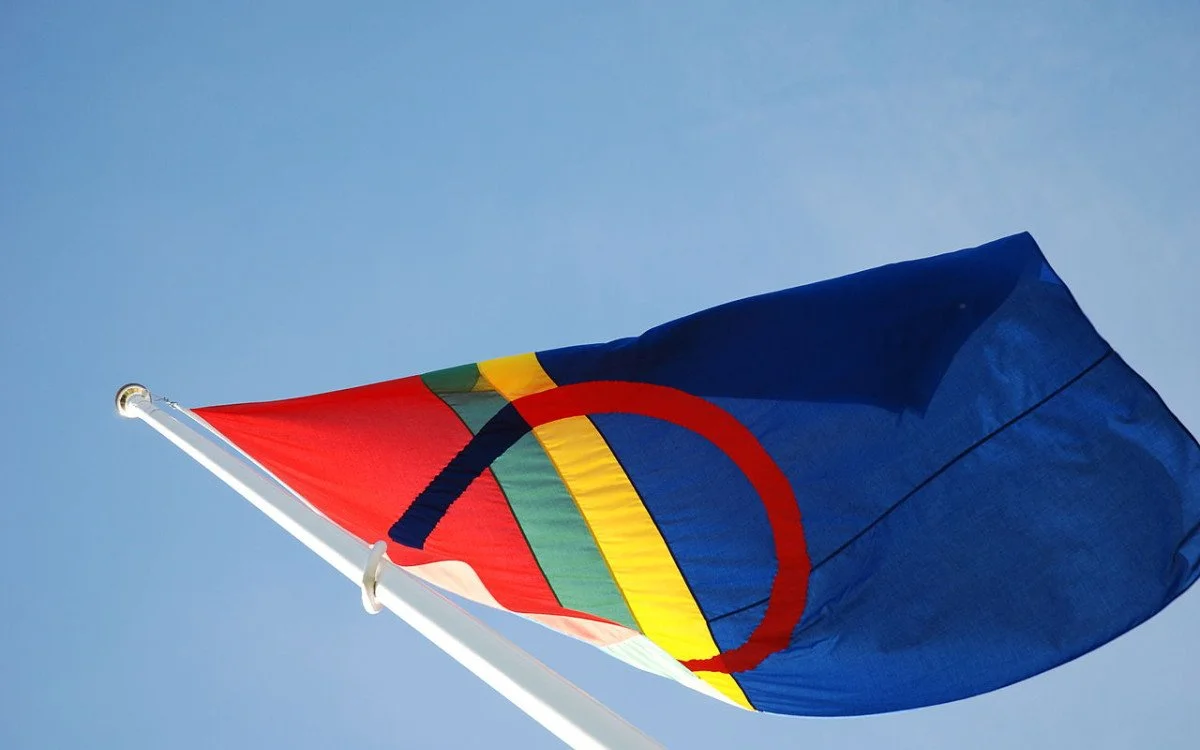
The Sami population has more rights than they experience being fulfilled. Trøndelag County Council's experiment with a Sami council has been an important step in the right direction.
The Trøöndelagen Saemien raerie – Trøndelag County Council’s Sami Council – which was active in the period 2021-2023, was intended as an arena for Sami participation. But despite the best intentions, the council struggled with poor attendance from Sami representatives, while the Sami representatives who did attend reported a system with little understanding of the Sami language.
Majken Paulsen, senior researcher at Nordland Research Institute , still believes that the county council should have been praised for the attempt.
– Even after four decades of Sami rights struggle, Norwegian administration is not set up for Sami participation. But it is crucial that someone takes responsibility and moves in the right direction, says Paulsen.
Why is it so difficult to successfully integrate Sami perspectives into a public council? In the article "Sami participation in a Norwegian county council after 40 years of struggle for rights," Paulsen collaborated with Astri Dankertsen and Ingvild Bjørnstad Åberg from Nord University. They have gone into depth about the council's work and mapped out the reasons why the county council struggled to create real Sami participation.
Small effect
In 1984, the first Sami Rights Committee submitted its first partial report, which concluded that the Sami in Norway had to be considered indigenous people.
– This was the first step in what we call in the article an ongoing Sami decolonization, says Paulsen.
Examples of milestones since 1984 are the Sami Act, which was introduced in 1987, the Sami Parliament, which was established in 1989, and the Finnmark Act, which was introduced in 2005. The question is how decolonization is progressing, 40 years into the process.
– There is an expectation that the measures will have a widespread effect, also in public administration, says Paulsen.
But the report from the Truth and Reconciliation Commission, which was submitted in 2023, shows that Sami rights that have been granted and legally clarified are not necessarily fulfilled. A recent example is the wind power plants at Fosen in Trøndelag, which led to a protracted battle both inside and outside the legal system to safeguard Sami rights.
– This shows the importance of examining the implementation of Sami participation and in the article we examine how the Trööndelagen Saemien raerie can be understood as part of an ongoing Sami decolonization process.
From adaptation to equality
To analyze the situation with participation in the Sami Council, the researchers took the concept of "indigenization" as their starting point.
“Indigenization is a non-linear process that occurs at three levels: inclusion, reconciliation and decolonization,” explains Paulsen. “The three levels can occur simultaneously.”
"Inclusion" is about getting indigenous people to adapt to the majority's systems and not the other way around.
"Reconciliation" allows the indigenous way of doing things to influence what happens. The system is thus changed to some extent.
The third level, “decolonization,” involves systems opening up to indigenous knowledge and methods. The parties are equal, and the modus operandi of the majority is no longer perceived as a given.
Paulsen and Åberg interviewed participants and interpreted their responses to understand why the council did not achieve the desired results, even though its intentions were the best. The concept of indigenization was thus used as a tool in this process.
Blind spots
"Inclusion" was the dominant level. The county council wanted to increase the proportion of Sami representatives. This is a characteristic of level one: inclusion.
This may explain why several of the participants expressed that they did not feel ownership of, or that it was as if they were "visiting" the council.
– It was said that the agenda power lay with the organizers, that everything that dealt with the Sami was framed by a premise and format that belonged to the majority. Even though it was called the Sami Council, it was not the Sami Council, says Paulsen.
Practical arrangements were attempted, but were not entirely successful. The framework, times and agenda for the meetings were based on county municipal structures, without the Sami Parliament's meeting schedule or the annual cycle for reindeer herding being taken into account.
– We see these as blind spots that show a management culture where existing practices for meeting activities were taken for granted and not questioned, says Paulsen.
At the same time, the Sami representatives also highlighted positive aspects of the council.
Lack of knowledge
The council served as an important meeting place for Sami in the region, and between Sami organizations and public actors. Participants experienced that the council had succeeded in establishing an arena where the majority participants were open and humble and wanted to learn from – as much as about – the Sami participants.
In their eyes, the council was moving – at least occasionally – up to level two: “Reconciliation.”
– They saw the value of meeting and described the council as a form of diplomacy, with various parties who are humble and committed, says Paulsen.
Several people nevertheless expressed that the distance between the Sami and the majority was too great and that the non-Sami representatives lacked knowledge about Sami culture and Sami perspectives.
While some participants accepted the majority actors' lack of knowledge and attempted to provide training in Sami culture, others had given up.
– They talked about feeling powerless and had given up on creating understanding for the Sami perspectives, says Paulsen.
But some also chose to confront the lack of knowledge.
Well-known tendency
One of the participants in the council expressed disappointment at the lack of knowledge among the organizers from the county municipality. She says:
"Why is it always us who have to understand? My generosity to understand Norwegian society is becoming less and less because Norwegian society is not clear about showing me that they are working to understand me."
Paulsen confirms that this participant is putting into words a well-known tendency in the public sector's interaction with the Sami people.
– It is always the Sami actors who must meet the majority. But it is important to highlight that the willingness to meet someone must be two-sided, says Paulsen.
There is much evidence that the Trøöndelagen Saemien raerie was a useful learning process for Trøndelag County Council, which has taken the researchers' input into account and established Saemien moenehtse, a participatory body that provides assessments and statements to the county council, the county committee and other case-handling bodies in the county council on matters affecting Sami affairs.
Important step
Whether the Saemien moenehtse will be a success remains to be seen. For now, the conclusion must be that 40 years after the Sami were recognized as indigenous people in Norway, the political and administrative systems that govern the country have changed little to accommodate Sami perspectives.
– I am not surprised. The systems are very difficult to change and partly self-reinforcing. So what they have done in Trøndelag County Municipality is very positive, they have shown a real willingness to do something about the situation and far from everyone does that, says Paulsen.
– The Sami population has more rights than they experience being fulfilled. The fact that Trøndelag County Council is so clearly trying to facilitate Sami participation is an important step in the right direction.
