
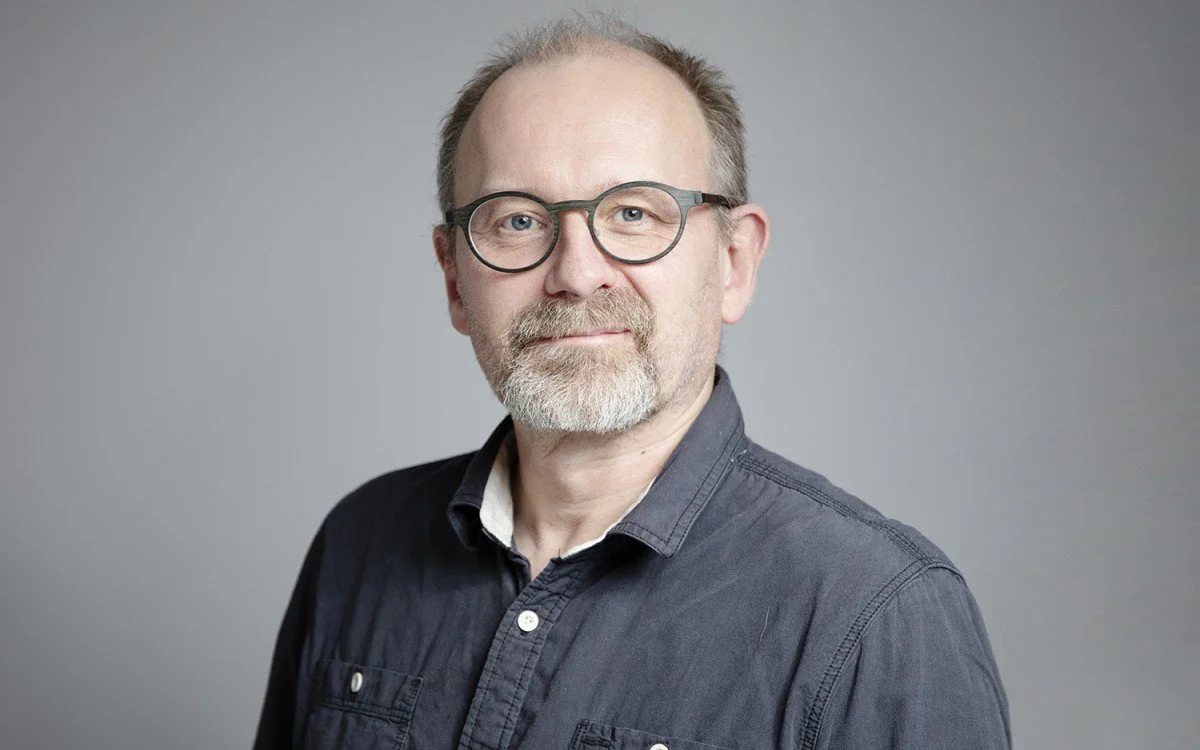
Senior researcher Arild Gjertsen. Photo: Marta Anna Løvberg
The Generalist Municipal Committee believes that municipalities should still have the same responsibility for statutory tasks, even though many of them lack both competence, capacity and people. – Democracy could be unleashed, warns Nordlandsforskning's Arild Gjertsen.
The generalist municipality principle means that all municipalities have the same responsibility for statutory tasks, regardless of size, structure or economy. The Generalist Municipality Committee, led by Tom Cato Karlsen, sees that many municipalities are struggling, but still wants to continue the principle.
– The committee points out that many rural municipalities are unable to recruit people with the right skills and are struggling with emigration and the elderly wave, says Gjertsen, who sits on the panel when Lytring asks "What do you do when your municipality collapses?" in Stormen Library on Wednesday, May 24th.
– The picture of the challenges that the committee outlines is absolutely correct, but I am more uncertain about the solutions that are proposed, says the senior researcher, who has been researching intermunicipal cooperation, municipal structure and regional development policy for a number of years.
Equally weak together
Karlsen and co suggest, among other things, municipal mergers and increased intermunicipal cooperation as ways to address the problems.
– The opportunity to create strong expertise environments is better if we have larger municipalities. That is an argument that I think has merit, says Gjertsen.
– But the question is whether we can end up in a situation where the lame leads the blind, meaning that two weak municipalities do not become stronger together. If that happens, it is not certain that merging will have any effect.
Nor does increased focus on intermunicipal cooperation need to solve the problems, according to the senior researcher.
– We already have a lot of that. But if the collaboration involves lifting functions and tasks out of some municipalities and onto others, it will not necessarily strengthen the generalist municipality principle, even though collaboration may be sensible in itself, points out Gjertsen.
Trust under pressure
The trend is inexorably moving towards rural municipalities with more and more elderly people and fewer and fewer young people to finance the need for care and attention.
– Although the media image does not always give the impression of it, we as a population have great trust in municipalities and the services they provide, says Gjertsen.
– But the system is under great pressure. If municipalities fail to deliver the services they are legally required to provide, it could potentially become a democratic problem.
