
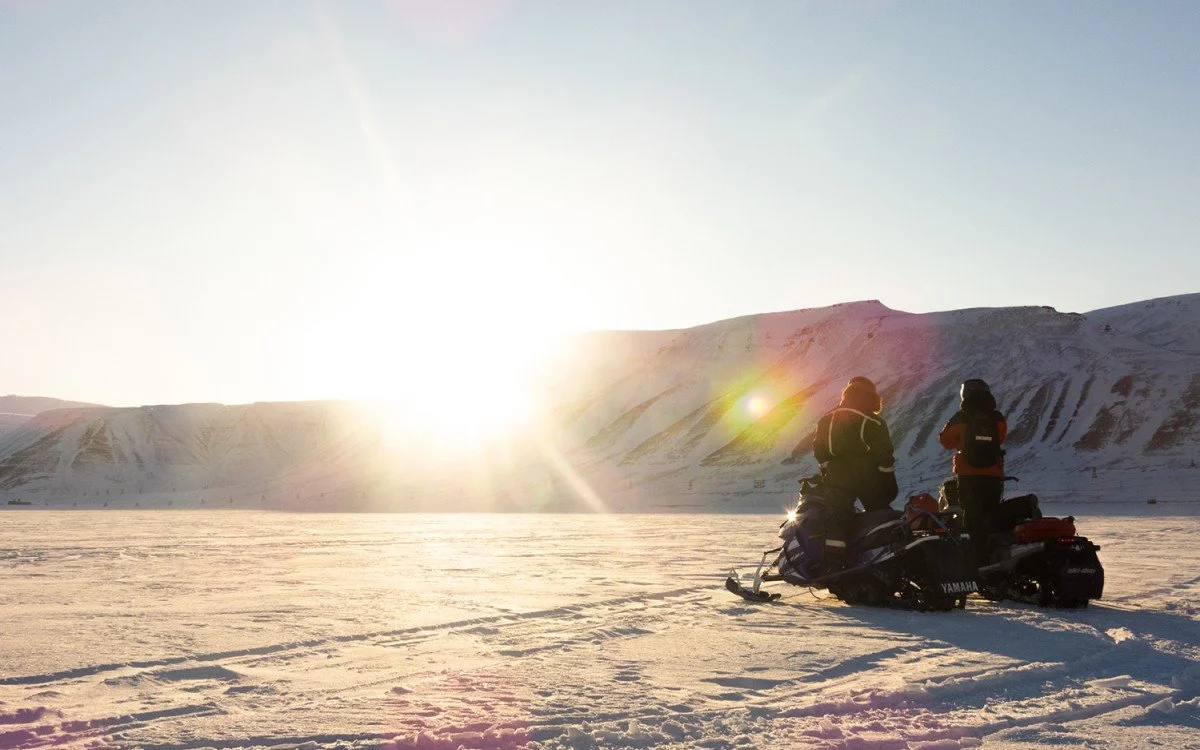
Extensive consequences of climate change and stricter rules for travel in nature present new challenges for tourism in Svalbard. Photo: Håkon Daae Brensholm / Visit Svalbard / nordnorge.com
Tourism in Svalbard is booming. At the same time, Svalbard is one of the places on the planet that is hit hardest and fastest by climate change. How can tourism adapt to the new reality?
After national authorities decided to phase out most coal mining, tourism has become one of the main industries in Svalbard.
“At the same time, we know that the island is particularly vulnerable to climate change. The snow season is already three weeks shorter than it was 30 years ago,” says senior researcher Anna G. Sveinsdóttir at Nordland Research Institute .
Together with colleagues from Vestlandsforsking and UNIS, Sveinsdóttir has prepared a report that examines the effects of climate change on the tourism industry in Svalbard. The report is a result of work in the research project "Sustainable tourism in Svalbard - a balancing act", where Researchers and tourism stakeholders are working together to understand how tourism in Svalbard can adapt to current and future changes in climate and nature in a sustainable way
– There is a lot of research on climate change in Svalbard, but little has studied how human activity on the archipelago, such as tourism, is affected by climate change, says Sveinsdóttir.
– Our report does just that.
More landslides and more frequent floods
So how is Svalbard feeling the effects of climate change? One of the effects is that the number of days with snow cover will be greatly reduced. Along the coast, there will only be a few days with snow cover during the year. Inland and higher-lying areas will also see fewer days with snow on the ground. What will this mean for land-based tourism?
Quite a lot, according to the researchers.
– Scooter traffic is forced onto the glaciers, where you are exposed to crevasses and more exposed to bad weather, says Sveinsdóttir.
– Rain in winter can also lead to flooding that destroys and closes important routes for snowmobiles, dog sleds and skiers.
Species from the south are taking over
Natural hazards could become a significant problem for tourism. The increase in precipitation will lead to more frequent avalanches and other types of avalanches will also increase and become more widespread.
– Increased winter precipitation contributes to more days with high avalanche risk, which will force tour operators to cancel trips in avalanche-prone terrain, for example from Longyearbyen to Barentsburg, says Sveinsdóttir.
At the same time, reduced snow cover will mean that many animal species adapted to a polar climate will gradually have to give way to species from the south.
– This is already happening with several polar seabird species, which are now in decline due to climate change, says Sveinsdóttir.
– There are also reports of increased polar bear activity in Isfjorden. Climate and environmental changes also make wildlife more vulnerable to impacts from human activity.
Flooded trails
Guidelines for future tourism in Svalbard clearly indicate that activities should be concentrated in Longyearbyen, Longyeardalen and Adventdalen. This means that the effects of climate change in these areas are of particular importance for tourism.
The researchers have little good news to report in this regard.
– The development of tourism products must take into account both the increased risk of flooding and mudslides, the increased risk of landslides and the increased risk of avalanches, says Sveinsdóttir.
– In practice, it will not be possible to build much new infrastructure, such as hotels and other accommodations. Combined with strict regulations and environmental requirements, this leaves little room for maneuver for the tourism industry.
Adventdalen is the main gateway from Longyearbyen to the Isfjorden area, as well as North Spitsbergen. Warmer and wetter climates will create challenges for snowmobiling, dog sledding and cross-country skiing through the valley due to more frequent occurrence of open streams and flooding of the trails.
New cruise season
Climate change is also being felt at sea. Sea ice is increasingly disappearing, giving sea-based tourism a new season to do business.
– There has been significant growth in ship traffic in the months of March to May over the past ten years, both expedition cruises and ordinary cruise traffic, says Sveinsdóttir.
– But after a ban on heavy oil came into effect in the protected areas, expedition cruise ships with a maximum of 500 passengers now dominate along the west coast.
While the absence of sea ice is good news for sea-based tourism, wildlife is not necessarily as enthusiastic. Loud ships can disturb marine mammals, while fast small boats risk colliding with seabirds.
– Finding a balance between nature-friendly and climate-robust tourism development and the need to preserve the vulnerable Svalbard nature is a main challenge for tourism in Svalbard, Sveinsdóttir states.
