
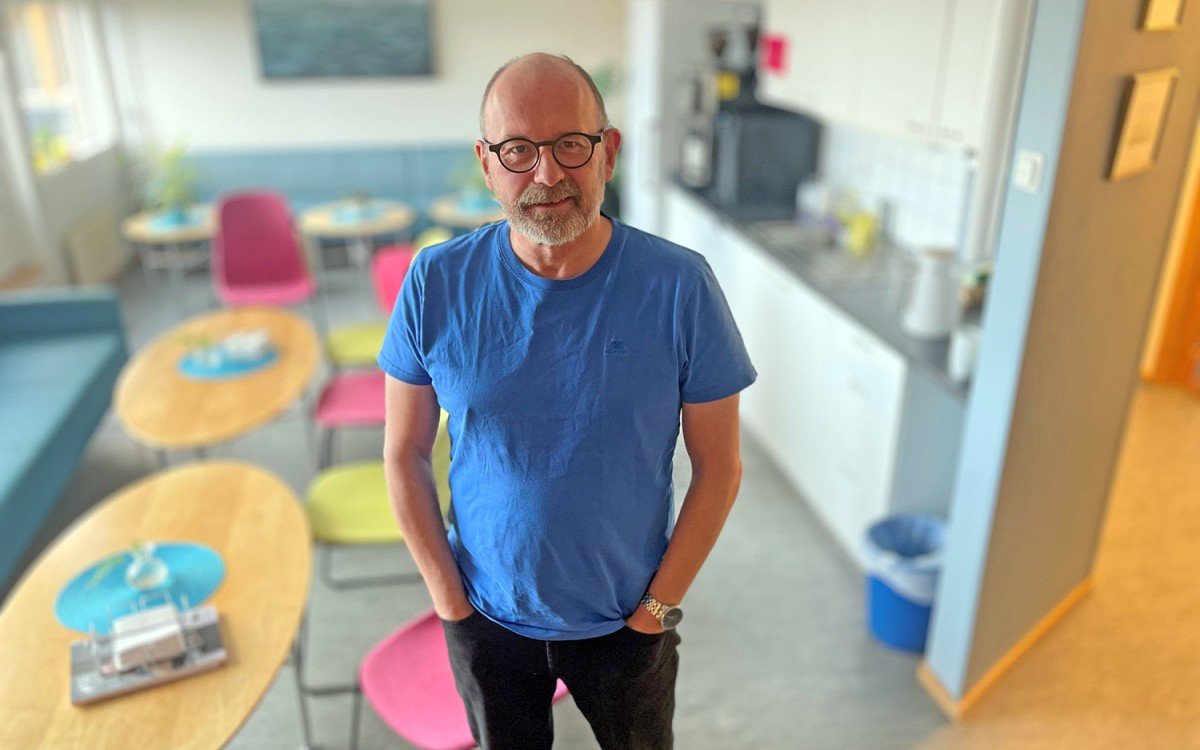
Senior researcher Arild Gjertsen. Photo: Thoralf Fagertun
Has the trust reform actually created more trust in ministries and agencies? Nordland Research Institute is on the case.
The trust reform was launched by the government in 2021, to reduce unnecessary reporting and documentation requirements and give more professional freedom to public employees. Three years later, it is difficult to say anything about the effect. The reform assumes limited management from a higher level and a low degree of reporting requirements related to the initiation of measures.
– The lack of such requirements must obviously be part of the package, but makes it challenging to measure the impact of the reform. What is actually happening? What is the specific content? says senior researcher Arild Gjertsen at Nordland Research Institute .
He is now leading a project that will do just that: attempt to measure the impact of the trust reform at the state level. Until the end of the year, Gjertsen and colleagues at Nordland Research Institute digging deep into ministries and underlying agencies to find traces of the reform, on behalf of the Ministry of Digitization and Public Administration.
Difficult to specify
Researching trust in the public sector is no unfamiliar exercise for Nordland Research Institute The project "Understanding the Role of Trust in the Institutions of the Welfare State (TRUSTSTATE)", which ended in January this year, examined the importance of trust in the Norwegian welfare state, with a focus on municipal services.
– The findings from the Norwegian municipalities suggest that the basic ideas behind the trust reforms are experienced as uncontroversial and fit well with the existing value base of the municipal organizations, says Christian Lo, who is researcher 1 at Nordland Research Institute , professor at Nord University and was project manager for TRUSTSTATE.
– Nevertheless, it turns out that it is often difficult for municipalities to concretize the ambition to work more trust-based so that it is expressed in practice.
The experiences from TRUSTSTATE will be important in the new project, which looks upwards towards ministries and agencies. Lo is also part of the project team.
Survey and interviews
So how do researchers go about finding increased trust in agencies? Nordland Research Institute attacks the issue from four fronts:
1. Gather all existing knowledge about the trust reform and its effects.
2. Send out a survey to government agencies. This includes ministries and all subordinate agencies, including the State Trustee Offices. The survey, which draws on experiences from TRUSTSTATE, will also be sent to elected officials.
3. Interviews with key people within a selection of government agencies. This method was also used successfully in TRUSTSTATE, which gives the researchers a good idea of what to ask.
4. Prepare a comprehensive analysis based on the three previous points. This will provide information about the scope and focus of the reform activities, but also provide important knowledge about where there are barriers and potential for improvement in the work.
– The goal of the reform must be to create something new, to have those involved work differently than they would have done without the reform. Will they be able to change routines? Will they be given room to develop things themselves? It will be interesting to find out, says Arild Gjertsen.
– The investigations and analyses we conduct will result in concrete recommendations for further work on the reform, he says.
The project "The impact of the trust reform on renewal and innovation work, stakeholder cooperation and reporting and control in the state sector" is being carried out on behalf of the Ministry of Digitalisation and Public Administration. The project has a start date of 24 June 2024 and ends on 1 December of the same year. Nordland Research Institute presents researchers Arild Gjertsen, Christian Lo, Mathias B. Reinar and Ragnhild Holmen Waldahl.
