
Why can't we save the planet?
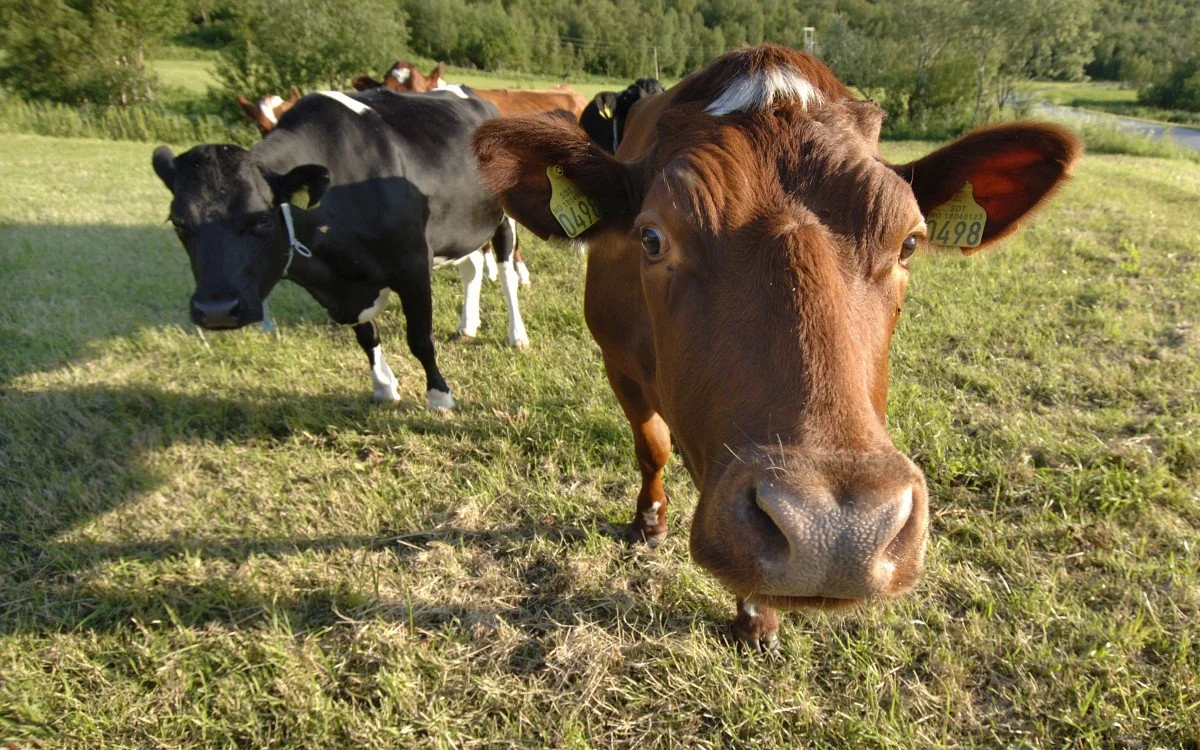
Cattle are the most widespread mammal on Earth, measured by weight. Beef causes almost eight times as much global warming as chicken and salmon, according to forskning.no . Photo: Ernst Furuhatt / nordnorge.com
Norwegian citizens buy Teslas and fly to the South, while the world gets warmer and animals become extinct. When we know the crisis the planet is facing, why are we unable to save it?
This paradox is the subject of debate on Lytring on Monday, September 5th in Stormen Library. The topic has also interested senior researcher Bjørn Vidar Vangelsten for a long time. The environmental researcher at Nordland Research Institute has examined consumption growth in Norway over the last 50 years and the trend is obvious:
– In 1970, each Norwegian lived on average in 29 square meters, today the figure is 58. In 1970, each Norwegian owned a 181-kilogram car, today we have 745 kilograms each. In 1970, each Norwegian ate 750 grams of meat a week, today the figure is 1.3 kilograms, says Vangelsten.
– Furthermore, we travel ten times more by plane than we did in 1970.
Is this behavior good for the planet? Not at all.
“Our consumption requires materials and energy. To obtain it, we must use increasingly larger areas and extract increasingly more materials from the earth,” says Vangelsten.
And that has consequences.
Few listen
According to the World Wildlife Fund, two-thirds of the world's wild animals have now disappeared. 96 percent of the world's mammals are humans and our domestic animals.
– The consequences of biodiversity loss are difficult to predict, but if we fail to live in harmony with the rest of the species on Earth, it could potentially threaten our civilization, says Vangelsten.
Something that clearly threatens our civilization is climate change. Virtually all of our transportation leads to greenhouse gas emissions, and we are now on track for three degrees of warming this century.
– If that happens, it will lead to a civilization-threatening crisis, the researcher warns.
But as usual, almost no one bothers to listen. Norwegians have known about the coming crisis for years, but little has happened.
Why that?
Caught in the hustle and bustle
Reducing your own consumption is not a popular exercise. The politician who suggests something like that is unlikely to reach the top.
– There are interest groups and political movements that want to address the problems, but for now they do not have enough power to take action as needed, says Vangelsten.
And most people don't want to take the crisis personally.
– The problems are perceived as distant in time and space. Taking charge of a major systemic crisis is abstract and difficult, says Vangelsten.
– The times we live in also do not invite reflection. We are trapped in a system of busyness, which invites quick solutions to achieve comfort. Just look at today's electricity crisis.
The waiting time is crucial
But eventually the crisis will become so obvious that we will have to take action.
– If we wait too long to turn the tide, we will have to use the resources for firefighting instead of long-term planning, says Vangelsten, who is on the panel during Monday's debate.
There he will be joined by Brita Staal from SALT, Pål Pedersen from Nord University, Linda Helen Haukland from Nordland County Council, Deputy Mayor of Bodø Municipality Ola Smeplass and General Manager of Bodø/Glimt Frode Thomassen.
The debate moderator is Arne O. Holm, editor-in-chief of High North News.
