
Joint efforts for Arctic fjords
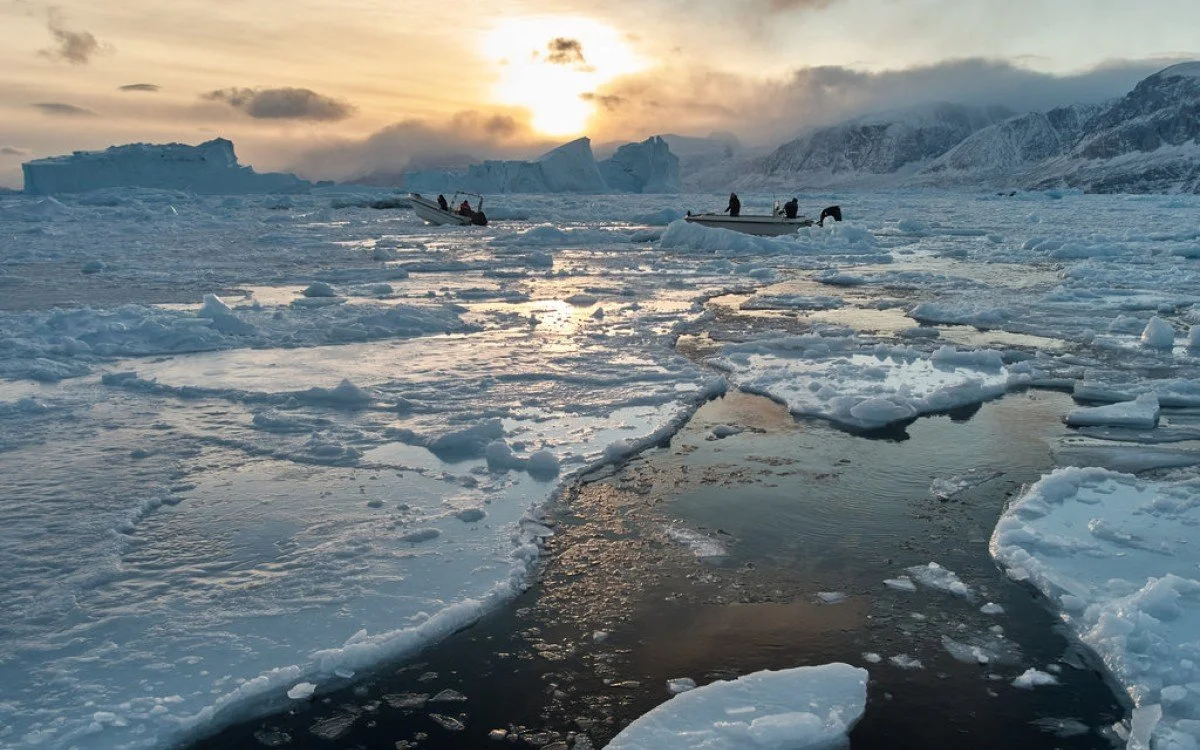
In Uummannaq, Greenland, hunters used to travel safely on the ice-covered fjord from December to May. In 2022, there were only two months of reliable ice. Photo: Adam Sébire / Climate Visuals
45 Researchers recently met in Bremen, Germany, to discuss the future of Arctic fjords and the communities around them. Perhaps the researchers' most important task is to listen to the local people in the north.
The EU-funded FACE-IT project investigates changes in Arctic fjord systems and how these changes affect human activity, especially fisheries and tourism. What happens to the communities around the fjords when glaciers and sea ice change their distribution and thus their biodiversity?
– The overall goal of the project is to create a way of managing communities that includes the knowledge of those who live and work there, says Grete Hovelsrud, senior researcher at Nordland Research Institute and member of the project's executive board.
– Local people have knowledge and an overview of local changes, which will differ from coastal community to coastal community. This knowledge and understanding is important to include in the management of the different areas.
New and creative ways of collaborating
The kick-off for FACE-IT was in 2020, but thanks to the pandemic, the various partners did not meet physically until the Christmas spirit set in in 2022. The location was Bremen in Germany.
60 Researchers from 15 different universities and institutions in eight countries. The partners in the project are different in many ways, but perhaps the most exciting thing is the interdisciplinary nature. In FACE-IT, natural scientists and social scientists collaborate. This means that the project develops knowledge both about changes in nature and what these changes do to the societies that depend on the same nature.
45 of the researchers gathered in Bremen to update each other on the progress of the project and to find the best possible collaborative solutions across social sciences and natural sciences.
“Finding the best ways to manage fjords and coastal communities in the Arctic requires us to collaborate in new and creative ways,” says Hovelsrud.
– It was very valuable to sit together at a table and have time to socialize with each other for three whole days.
Out of the comfort zone
With so many Researchers from such different fields, it is considered crucial for the success of the project that everyone knows each other and what tasks each person performs. The program in Bremen was therefore extensive, with activities and conversations from morning to evening.
Hovelsrud and the rest of Nordlandsforskning's envoys returned to Northern Norway slightly exhausted, but in good spirits and ready for further efforts.
– We have two years of hard work ahead of us, where we have to step out of our comfort zones as Researchers and really listen to what others are trying to tell us, emphasizes the experienced polar researcher.
