
ArcSolution to combat pollution in the Arctic
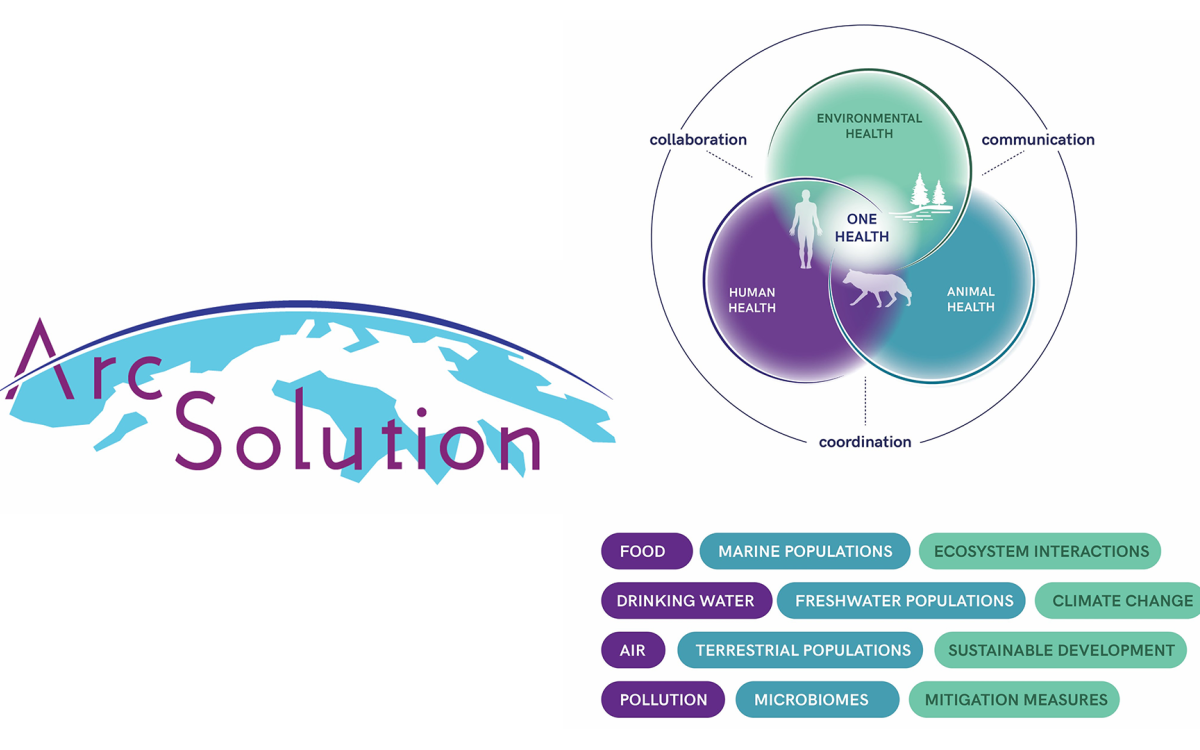
The EU project ArcSolution is underway. The project aims to reduce pollution in the Arctic using a holistic approach that takes into account both the environment and human health.
The project will study environmental pollutants such as organic chemicals, heavy metals, microplastics and pathogens in a changing Arctic. The goal is to create sustainable solutions that involve local communities in protecting the environment and human health.
Pollution in the Arctic is a major problem. It harms the environment and the health of the people and animals that live there. As the ice melts, harmful pollutants are released, and new pollutants are introduced into the area due to human activity. The result is serious problems for plants and animals, the food supply and local communities. ArcSolution is working to solve these problems. The project uses the latest science and works with the people who live in the Arctic to find the best solutions.
ArcSolution brings together experts from institutions in Norway, Finland, Denmark, Germany, Greenland, Switzerland, China and Canada. Nord University in Norway is leading the project, with Jon Øyvind Odland, a physician, epidemiologist and specialist in obstetrics and women's health, as scientific coordinator. He emphasizes that ArcSolution focuses on real solutions for the people of the Arctic, not just reports to Brussels.
Project information
Funding : European Union, Horizon Europe Programme
Timeframe : August 1, 2024 - July 31, 2028
Project partners:
Nord University (NORD), Norway
University of Oulu (UOULU), Finland
Aarhus University (AU), Denmark
Norwegian University of Life Sciences (NMBU), Norway
Arctic Knowledge (AKn), Norway
Illisimatusarfik, University of Greenland (UGR), Greenland
Alfred Wegener Institute (AWI), Germany
Ocean Atmosphere Systems (OASys), Germany
Nordland Research Institute , Norway
UiT - The Arctic University of Norway, Norway
Arctic Monitoring and Assessment Program Secretariat (AMAP), Norway
Associated partners :
Agroscope (AGRO), Switzerland
Peking University People's Hospital (PKU), China
Memorial University of Newfoundland (MUN), Canada
“We are proud to lead this important project together with a fantastic team from ten countries. Our goal is to create solutions that directly benefit Arctic communities,” he says.
From science to solutions: A glimpse into the project
ArcSolution has several work packages (WPs) that address different aspects of Arctic pollution. All work packages are interconnected and overseen by WP1, which focuses on management and administration.
“At Nord University, we are proud to lead this innovative work with a One Health perspective. We look forward to creating effective and lasting solutions to the urgent pollution problems in the Arctic,” says Odland.
One Health is an approach that recognizes that human health is closely linked to the health of animals and our shared environment.
Work Package 2 serves as an overarching framework that forms the basis for all other work packages in the project. This work package involves establishing a specialized One Health framework tailored for the Arctic, which will guide and integrate efforts across the project. This framework will combine scientific data with insights from local communities, indigenous groups and health professionals. In addition, Work Package 2 will include grassroots research initiatives to close data gaps and increase community engagement.
In work package 3, researchers will study pollution sources, transport pathways and accumulation of pollutants in relation to climate change, with a focus on human exposure. This work package will provide locally adapted lists of pollutants and exposure models for each site.
WP4 will investigate how environmental toxins affect the health of ecosystems, biodiversity and humans. We will assess how environmental toxins move through the food chain, and investigate how bacteria and viruses are transmitted between wildlife and humans. The results will include toxicity data, risk assessments and insights into the microbiome.
Work Package 5 will focus on developing zero-pollution technologies and strategies for a circular bioeconomy that ensures clean drinking water and food security. This work package will provide tailored strategies to reduce pollution and ideas for future food supply in Arctic communities.
The final work package aims to engage the general public, especially young people, in pollution issues. Through public research projects and outreach, this work package will also inform decision-makers and ensure that ArcSolutions’ results are sustainable. The outputs will include training materials, policy briefs, and strategies for incorporating One Health into academic programs.
Nordland Research Institute is actively involved in the ArcSolution project. Senior Researcher Majken Paulsen is the internal leader. Our researchers use their expertise in sustainability, environmental management and community engagement to develop practical solutions for Arctic communities. Nordland Research Institute takes a health perspective and a bottom-up understanding of how pollution affects people and other life forms in the Arctic. The institute works with local communities to formulate relevant and prominent strategies to address these challenges and support the establishment of sustainable Arctic societies. This approach ensures that the project’s pollution management plans are sustainable and culturally sensitive, contributing to the resilience of the Arctic environment and local communities. In addition, Nordland Research Institute crucial for communicating the project's findings and results in an effective manner.
A participatory approach
One of ArcSolutions’ unique features is its participatory approach. Local schools, municipalities and indigenous communities will be directly involved through citizen science initiatives, allowing residents to contribute to pollution monitoring and mitigation efforts. This collaboration will ensure that the solutions developed are practical, culturally appropriate and sustainable.
NRI is conducting a comparative, bottom-up study in Tromsø and Longyearbyen to challenge and expand the current operationalization of the One Health concept.
– The understanding of health depends on how knowledge is produced and who has access to it. Our approach takes into account power dynamics and the impact of structural differences at both group and individual levels. We will also explore the relationship with nature, the challenges arising from climate change, living in marginal areas such as the Arctic, cultural practices and other potential factors that influence our understanding of health in the Arctic, says Majken Paulsen.
In addition to scientific research, ArcSolution aims to influence policy at both national and international levels. The project will produce policy briefs and recommendations that support pollution reduction and resilience in Arctic environments. These results will contribute to the EU Green Deal and other global environmental agreements, and strengthen the Arctic's role as a critical region in the fight against climate change.
