
– We must scrap the idea of perpetual economic growth
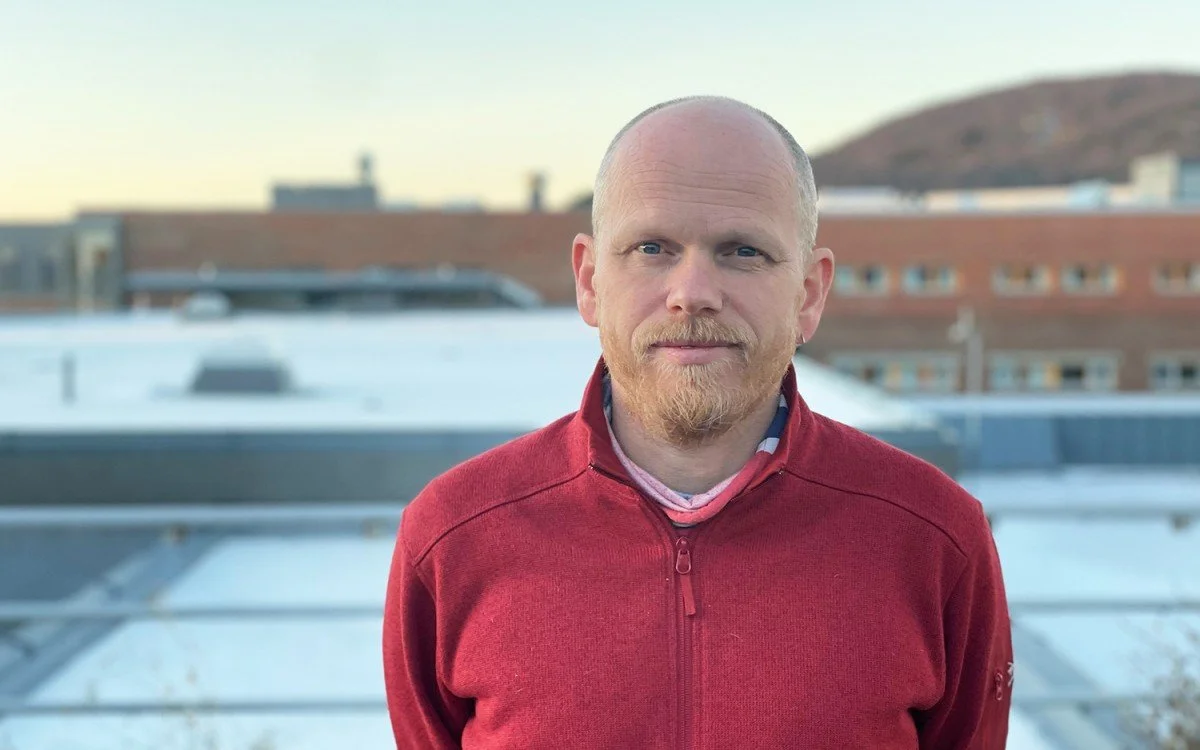
Senior researcher Bjørn Vidar Vangelsten. Photo: Thoralf Fagertun
That's according to senior researcher Bjørn Vidar Vangelsten. He is one of several Researchers who believe that the principle of economic growth should be shelved. But not everyone agrees.
On Thursday 9 November, the future economy will be discussed at Mo. Nordland Research Institute and Nord University are re-arranging the debate concept Lytring at Park 22 Byscena. And which city is better suited for the discussion about economic growth than Mo i Rana? The debaters will find out whether we should still have growth as a principle or whether downsizing and less purchasing power is now the right way to go.
Senior researcher at Nordland Research Institute , Bjørn Vidar Vangelsten, has no doubts.
– Since the beginning of the 20th century, the world economy has grown 30 times larger. A couple, three percent a year sounds innocent, but in 60 years the economy becomes six times larger, in 120 years it becomes 35 times larger, he says.
– If we fail to decouple growth from increased use of material resources and energy, such growth will be completely catastrophic for the planet.
New ways to measure prosperity
Vangelsten is supported by systems economist Marie Storli at Æra Innovation. She is a supporter of the concept of "degrowth", or "nedvekst" in good Norwegian.
– Degrowth is about reducing the use of materials and energy. In a degrowth perspective, politics should get rid of the goal of economic growth and find other ways to measure progress than gross domestic product, says Storli.
Gross domestic product (GDP) is a measure of total economic activity in a country, expressing the economic value added earned through the production of goods and services. GDP is used as a measure of the state and development of a country's economy.
– Many believe that GDP growth is the goal and this principle is embedded in Norwegian politics. But GDP growth is not necessarily a good thing. If a tanker runs aground and causes an oil spill along the Norwegian coast, it will require a lot of resources to clean up and this work will increase GDP, Storli points out.
– Perhaps there are better ways to measure prosperity than GDP. Perhaps it is more fruitful to look at things like the development in life expectancy and other indicators that say something about what it is like to live in Norway, instead of believing that everything can be summed up in a single number.
No need for downsizing
Rune Dahl Fitjar is a professor at the Center for Innovation Research in Stavanger. Unlike Vangelsten and Storli, he gives continued economic growth the thumbs up.
– My main point is that growth in the economy primarily occurs through qualitative changes, not quantitative ones, says Dahl Fitjar.
– This means that there is not necessarily a connection between growth and resource use and environmental footprint. Sustainable growth requires that the quality of what is produced improves and thus leads to positive developments in living standards.
The innovation researcher does not believe that a decline in living standards is necessary to save the planet.
– I agree that we must reverse the coming climate change, but we can do that by working in a different way, not by returning to a more primitive society, says Dahl Fitjar.
– Most people think that growth means more resource use and the production of more things. It doesn't have to be that way. We can increase our standard of living without increasing our climate footprint by consuming intangibles such as culture, food, drink and digital services.
Rune Dahl Fitjar, Marie Storli and Bjørn Vidar Vangelsten will be on the debate panel on November 9. They will be joined by Kim Andre Åsheim from Mo Industrial Park. The debate will be moderated by Peter Eide Walseth.
