
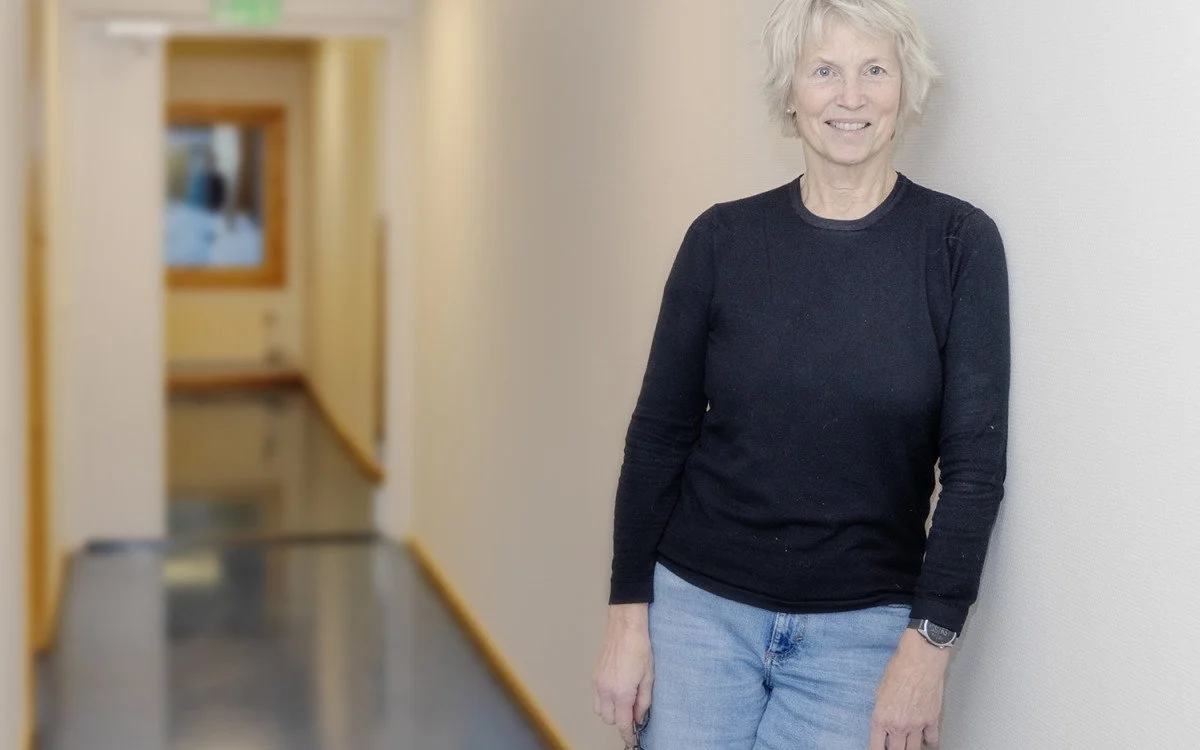
Iselin Marstrander. Photo: Marta Anna Løvberg
When she started, there was a fax machine in the office. Outgoing director Iselin Marstrander has led Nordland Research Institute through ten years of tremendous development.
The fax quickly disappeared. Now that Marstrander is leaving the institute, Nordland Research Institute well underway with a focus on artificial intelligence. The directorship has been characterized by rapid technological development, ongoing strategic challenges and a constantly changing research field. Through this eternal storm, Marstrander has kept the ship on a straight keel and maneuvered into ever new, exciting waters.
“I am happy with what we have achieved. Ten years is a good period, long enough to see results from the strategic choices we have made,” she says.
Because there are many milestones to point to. Nordland Research Institute In 2024, the organization is completely different from when Marstrander walked in the door one February day in 2014.
Regional spread
Nordland Research Institute has long marketed itself as a regional research institute. But before Marstrander, the only office was in Bodø, Nordland's largest city.
Maiken Bjørkan, who is now researcher 1 at Nordland Research Institute and heads the research group Climate, Natural Resources and Nature Loss, was hired in 2015. During the interview, the Mo i Rana native was asked if commuting between Bodø and Mo i Rana would be a problem. She boldly replied that commuting would not be necessary, since the institute should establish a local office in Mo.
– It was perhaps mostly meant as a joke, but Iselin liked the idea, says Bjørkan.
– As a regional institute, we should be present where people live, even outside the largest cities, says Marstrander.
So there was an office in Mo. And in Svolvær. Now both branches have grown to six employees each.
– The establishments have worked excellently. We have many more projects in Helgeland and in Lofoten than we had before, says Marstrander, who, together with the management group, has considered new departments in Troms, Finnmark and Svalbard.
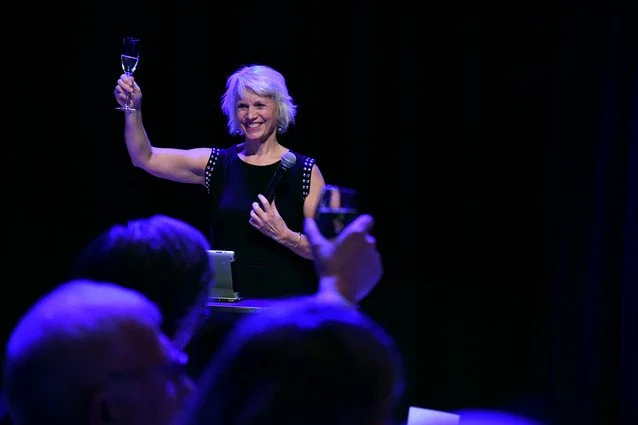
Iselin Marstrander was given the opportunity to lead, among other things, Nordland Research Institute through the institute's 40th anniversary, which included a brilliant party in Stormen Concert Hall. Photo: Thoralf Fagertun
– It's not a bad idea, but such an expansion will be up to the next director, she says.
European adventures
Being present regionally is important. Marstrander understood early on that it can be combined with international ambitions.
– Many northern Norwegian regions are exciting cases in international projects. Nordland Research Institute functions as a hub between local business and large, international research environments, she says.
That Nordland Research Institute Participating in large, international projects – and even leading some of them – is a feather in Marstrander's cap. When she took over as director, the institute was heavily dependent on funding from Nordland County Council.
“We needed more legs to stand on. Getting involved in the EU was important to get more funding opportunities for our research. EU projects were also associated with quality and prestige, and access to exciting academic environments and networks,” she says.
In one of many job interviews for new Researchers , the director sat face to face with Vietnamese Nhien Nguyen. Terrible at Norwegian, terribly good at much else.
– Nhien only spoke English. It was unusual for us to Researchers who didn't know a word of Norwegian. But it opened the door for her to work on EU applications, says Marstrander.
– It's about hiring the right people. Nhien opened the door to the EU for us. Now a number of our Researchers the expertise needed to succeed with EU projects.
A good example of the success of this initiative is the three-year EU project EmpowerUs. The project has 16 partners in nine countries and a budget of NOK 60 million. It is led from Mo i Rana - with the already mentioned Maiken Bjørkan as project manager - and includes several coastal communities in Helgeland.
Belonging in the North
Over the years, the institute's identity has become more clearly linked to the high north. At a strategy meeting, employees were challenged to reflect on whether Nordland Research Institute could just as easily have been in Oslo. Gunnar Bovim from NTNU was hired to get the ideas going and he succeeded.
– I became clearly aware that we should be located in Northern Norway. We are part of the culture here, we develop knowledge and expertise that benefits the business community in Northern Norway, the highlands and the Arctic. We often function as the research and development departments of the business community in the north, says Marstrander.
– We do not only work on High North issues, but contributing to knowledge building in the High North and the Arctic is our primary task. We bring Northern Norwegian partners into international projects and add international expertise to Northern Norwegian regions.
Nordland Research's slogan is "Knowledge where the future is shaped." The High North shapes the future within important topics such as climate, geopolitics, and security and emergency preparedness.
“We contribute to the social scientific knowledge base about the High North,” says Marstrander.
Not completely gone
Being able to contribute knowledge that makes a difference and creates changes in society has been a strong motivator for Marstrander.
– I like working in non-profit, meaningful organizations that are not fundamentally commercial. What makes sense is contributing to a better society, she says.
Although the director position will be gone, Marstrander is not leaving the research world completely. She will sit on the board of the Research Council of Norway until 2027.
“So I have to stay well informed about the research sector,” she says.
A sector she has dedicated countless hours to over the past ten years.
– It might be good to calm down a little, my friend. But we'll see what I feel like doing in six months.
