
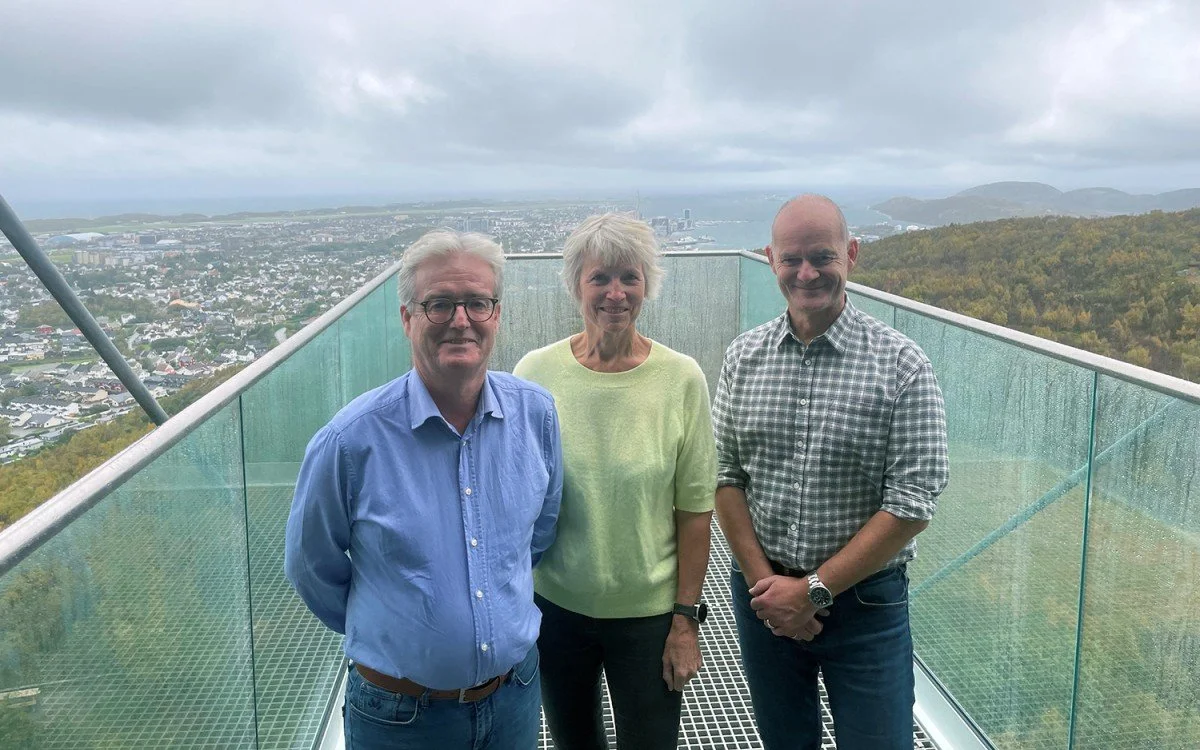
Johannes Waage Løvhaug (Research Council), Iselin Marstrander ( Nordland Research Institute ) and Dag Røhjell (PST) discussed research and safety at Wood Hotel in Bodø. Photo: Thoralf Fagertun
Both the Research Council and PST are asking the research sector to be vigilant.
Then Nordland Research Institute At a recent institute meeting at the Wood Hotel in Bodø, intelligence and security were on the agenda. Both the Research Council and the PST (Police Security Service) were invited to speak on the somewhat controversial topic.
Managing Director of Nordland Research Institute Iselin Marstrander, who also sits on the board of the Research Council, thinks the time has come to raise the issue with the research staff.
– Due to the geopolitical situation and interest from foreign nations, it is necessary to be aware of how research is carried out and who we collaborate with, says Marstrander.
– Nordland Research Institute conducts research that may in the future be classified and shielded from the public, especially related to the high north and the Arctic.
Increased awareness
Johannes Waage Løvhaug is Director of the Research Council of Norway's Department for the Research and Innovation System. He came to Bodø to talk about the Research Council's work to promote a holistic research system that better connects civilian research to the knowledge needs of defense, security and emergency preparedness.
“Research is becoming increasingly important for national security. We are concerned that the capacity in civilian research can be used to a greater extent in a defense context,” says Waage Løvhaug.
One consequence of the research becoming interesting for Norwegian military interests is that it may also become interesting for foreign powers.
– Open research must continue to be the norm for scientific activity and international collaboration is absolutely necessary to develop research further, says Waage Løvhaug.
– At the same time, there is a need to develop measures that promote research safety and protect sensitive knowledge. This is a difficult balancing act and an issue that the Research Council takes very seriously, assures the department director.
The Research Council worked according to the principle that the research system should be as open as possible and as closed as necessary.
“Research in and on the High North is potentially interesting for foreign powers. Social science research can also have high value,” says Waage Løvhaug.
– It is important to have good dialogue between all the actors working on research on this. The new global security situation requires a whole new level of awareness from us in the research sector.
Not everyone wants us well.
A greater degree of awareness is also the order from PST and Police Chief Dag Røhjell, who offered Nordland Research Institute at both lectures and workshops during his visit to the institute collection.
– Social science research helps shape Norwegian policy for the High North. It is important to be aware of which threat actors are interested in this knowledge, says Røhjell.
The Norwegian Security Service (PST), which works to prevent criminal acts against national security, has uncovered several spies in Norwegian research institutions in recent years. Røhjell therefore asked Nordlandsforskning employees to be vigilant.
– The world is not just kind and straightforward, and not everyone wants us well. It is important to increase awareness of the value of our research and that it may be interesting to foreign powers, he says.
Røhjell showed examples of Researchers who have been tricked or tempted to share information with agents from states that threaten Norwegian interests. Nordlandsforskning's director takes the warnings seriously.
– While it is not desirable to become suspicious of everyone, it is important to have a realistic approach to security issues and be open to discussing any concerns with colleagues, says Marstrander.
