
Norwegian municipalities should be inspired by the moon landing
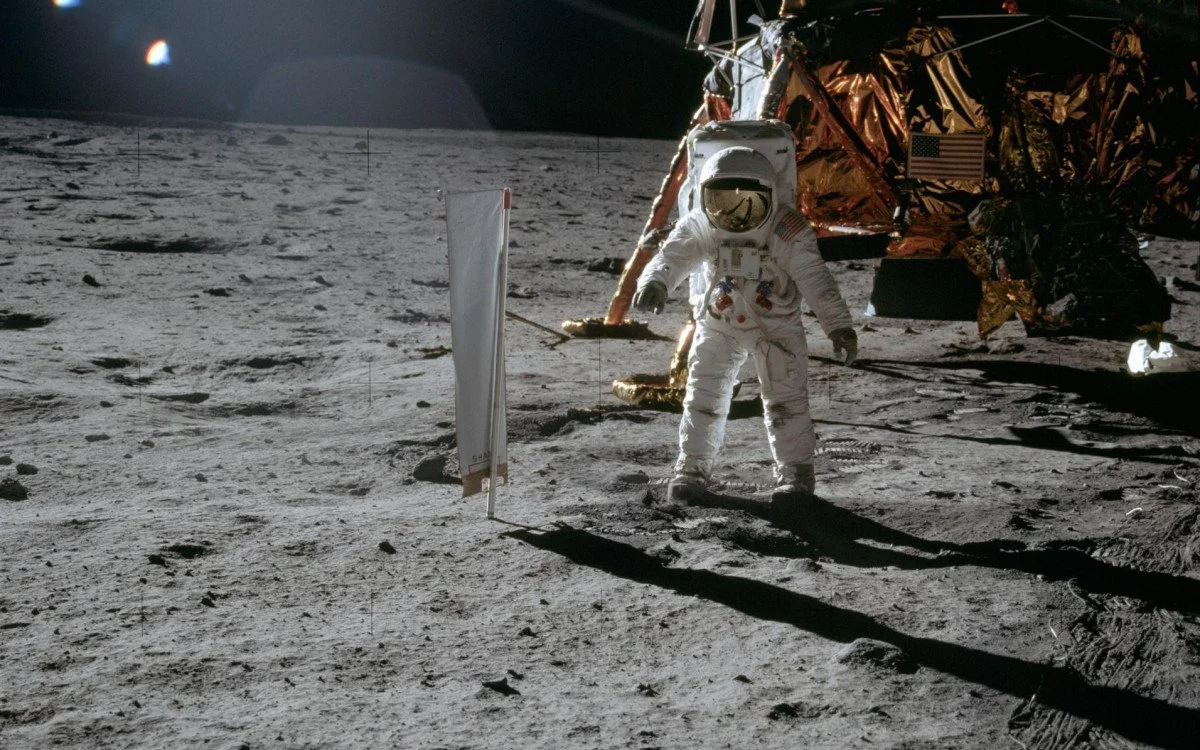
Edwin E. "Buzz" Aldrin Jr - the astronaut in the photo - can thank a well-targeted community mission for allowing him to walk around the moon in 1969. Photo: Neil A. Armstrong / NASA
Targeted social missions are often associated with global challenges, but can also be applied in small municipalities with major challenges, believes Researchers from Nordland Research Institute .
Holtålen Municipality in Trøndelag is dropping external consultants and is focusing on the municipality's own employees having the expertise and knowledge required to solve significant staffing and financial challenges. The method used corresponds to "missions", or "targeted social missions" in Norwegian, which characterizes, among other things, the research policy of the EU and the Research Council. The fact that such a methodology can work at the municipal level is new and has captured the interest of two Researchers from Nordland Research Institute .
Senior researchers Stian Bragtvedt and Ragnhild Holmen Waldahl have studied Holtålen's project and written the article "Municipal Moon Landing: Targeted Community Missions at the Micro Level." Here they compare Holtålen's plans with the 1969 moon landing, the epitome of a targeted community mission.
The researchers believe that Holtålen can inspire other municipalities that are struggling with the same challenges as themselves. And there are many of them.
With blank sheets
Times are tough in Norwegian municipalities. An aging population and low birth rates mean increased demand for municipal services, but less available labor. In addition, the typical Norwegian municipality is bankrupt.
Holtålen is in this respect a typical Norwegian municipality. Five million must be saved in the operating budget and over the next few years 100 people of working age will retire.
– In recent years, there has been a recognition in the municipality that they are unable to meet the need for labor through immigration, nor to buy their way out of the problem by outbidding neighboring municipalities on wages and working conditions, says Bragtvedt.
Previous attempts at efficiency, where operational cuts had been defined by external consultants, ended in conflict, division and postponed decisions. The municipal leadership now wanted to go in a completely different direction. The innovative project "Blank Sheet" was born.
Will improve own field
The goal of the project is to use the resources of labor and money better. By "working smarter", the municipality will be able to maintain the current level of services also in the future, despite the high pension pressure.
– The goal is to come up with better solutions for working smart, but this time external consultants will not be used. The solutions will come from the municipalities' own employees, says Bragtvedt.
The proposed changes are being worked on by 13 different groups divided into different sectors in the municipality. The groups are tasked with looking for improvements within their fields. The improvements will be evaluated according to the extent to which they contribute to solving the challenges of lack of manpower and money.
And this process reminds scientists of the moon landing in 1969. Why?
Small-scale moon landing
When the United States decided to put humans on the moon, the president got the entire nation to work together. The lunar project became a “mission,” a shared goal in which everyone could contribute to its success.
– Economist Mariana Mazzucato has developed a theory in which she sees missions as a way to give direction to innovation. She believes that states should be inspired by the American moon landing in their innovation work and formulate cross-sectoral goals, says Bragtvedt.
– But there is nothing to prevent the method from working on a smaller scale. There are examples of so-called "micro-missions", but not at the municipal level, such as Holtålen's "Blanke ark" project.
Holtålen has – without thinking too hard about Mariana Mazzucato – formulated a sector-wide goal and motivated the employees to work together towards the goal. According to Bragtvedt and Holmen Waldahl, they have – aimed for a municipal moon landing.
Common challenge
It is too early to say whether Holtålen will succeed in its targeted social mission, but the researchers believe that the process points to a new and interesting direction for Norwegian municipalities.
– If Blank Sheets is successful, it is because the actors themselves, the participants in the working groups, understand themselves precisely as participants with real power to change. If micro-missions are to mobilize at the municipal level, a "big challenge" must first be articulated that is perceived as legitimate by the actors one wants to mobilize, and then a role that these actors can imagine entering into must be defined, explains Bragtvedt.
– If this method is successful in Holtålen, it can be successful in many Norwegian municipalities, he says.
