
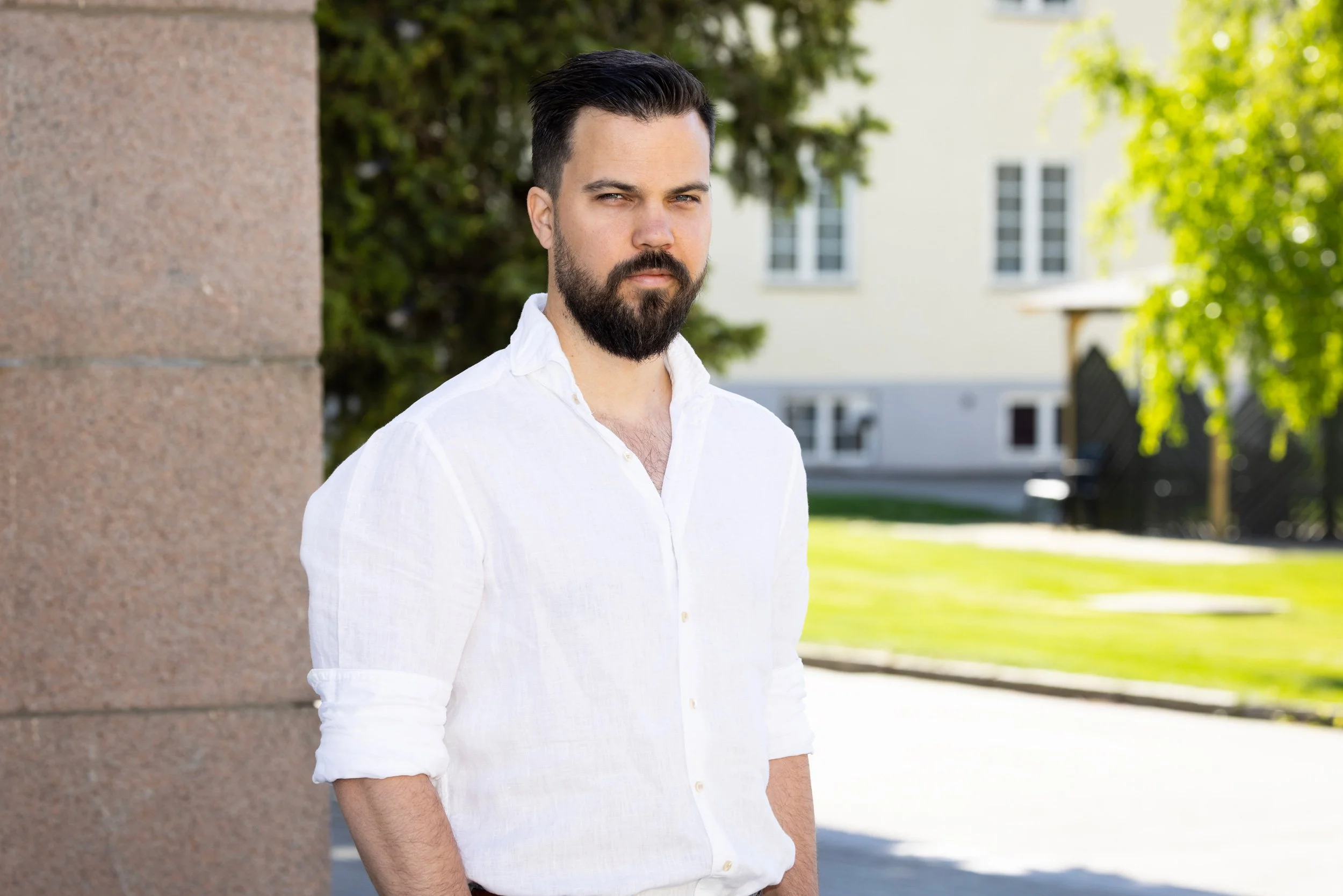
Can influence elections. Buvarp is more concerned about foreign influence in the elections in 2029 and 2033 than he was in the general election in 2025. Developments in artificial intelligence are an important part of the concern. Photo: Anders Halvorsen Fehn, FFI
Russia is exploiting the conflicts that already exist in Europe to weaken trust in democratic institutions. Norway lacks a unified function to monitor and warn about foreign influence, believes senior researcher Paul Buvarp.
Paul Buvarp is a senior researcher at the Norwegian Defence Research Institute (FFI), where he researches foreign influence and disinformation. He participates when Lytring invites you to a debate about the conditions of freedom of expression at Stormen Library in Bodø on November 25th.
Russian influence operations are often about intensifying existing conflicts, rather than creating new ones. The goal is to weaken trust in authorities and divide European societies, according to Buvarp.
– They find something that already hurts, and try to make it even worse.
One example is when a Norwegian ship came to the rescue after a Russian vessel ran into problems off Spain. The incident was later portrayed on Russian channels as an example of Norwegians letting Russian sailors drown due to Russophobia. In reality, the Norwegian ship followed instructions from Spanish rescue authorities, and no one drowned, according to Buvarp.
Norway lacks a unified function
Sweden has established its own authority for psychological defense, and several European countries have similar schemes. Norway lacks a unified function to monitor the information environment and warn of foreign influence, according to Buvarp.
– We have academics who follow, a small mandate in PST, the research community at FFI, Faktisk.no and editorial offices around. I don't think it's enough at all.
Norwegian government is organized according to the sector principle, where different authorities are responsible for their own areas. Hybrid threats often cut across these areas of responsibility, which makes it more difficult to see the connections and coordinate efforts, according to Buvarp.
– We need a function in the state apparatus that is responsible for monitoring the information environment and notifying when things start happening from outside.
More concerned about future elections
Buvarp is particularly concerned about how artificial intelligence could affect upcoming elections. Increasingly lifelike images, videos and audio recordings could make it harder to distinguish real from fake content.
– I was not particularly worried about the 2025 election, but I am quite worried about the 2029 and 2033 elections.
What threatens freedom of expression, and how can we protect public discourse from foreign influence without limiting the space for dissent? This is the topic when Lytring invites you to a debate with Minister of Culture and Equality Lubna Jaffery, researcher Kjetil Jakobsen at Nord University, senior researcher Paul Buvarp at FFI, editor-in-chief Helge Nitteberg at Nordlys and researcher Marjan Nadim at the Institute for Social Research.
Jaffery will give an introduction before the debate. She has not wished to comment on this matter, as the topic is partly outside her area of responsibility and affects security policy.
Editor Anki Gerhardsen leads the conversation.
The debate will take place on Wednesday, November 25th, from 6:00 PM to 7:30 PM at Stormen Library in Bodø. It can also be followed digitally via Lytring .