
European partners launch AgroPolis to strengthen sustainable food systems
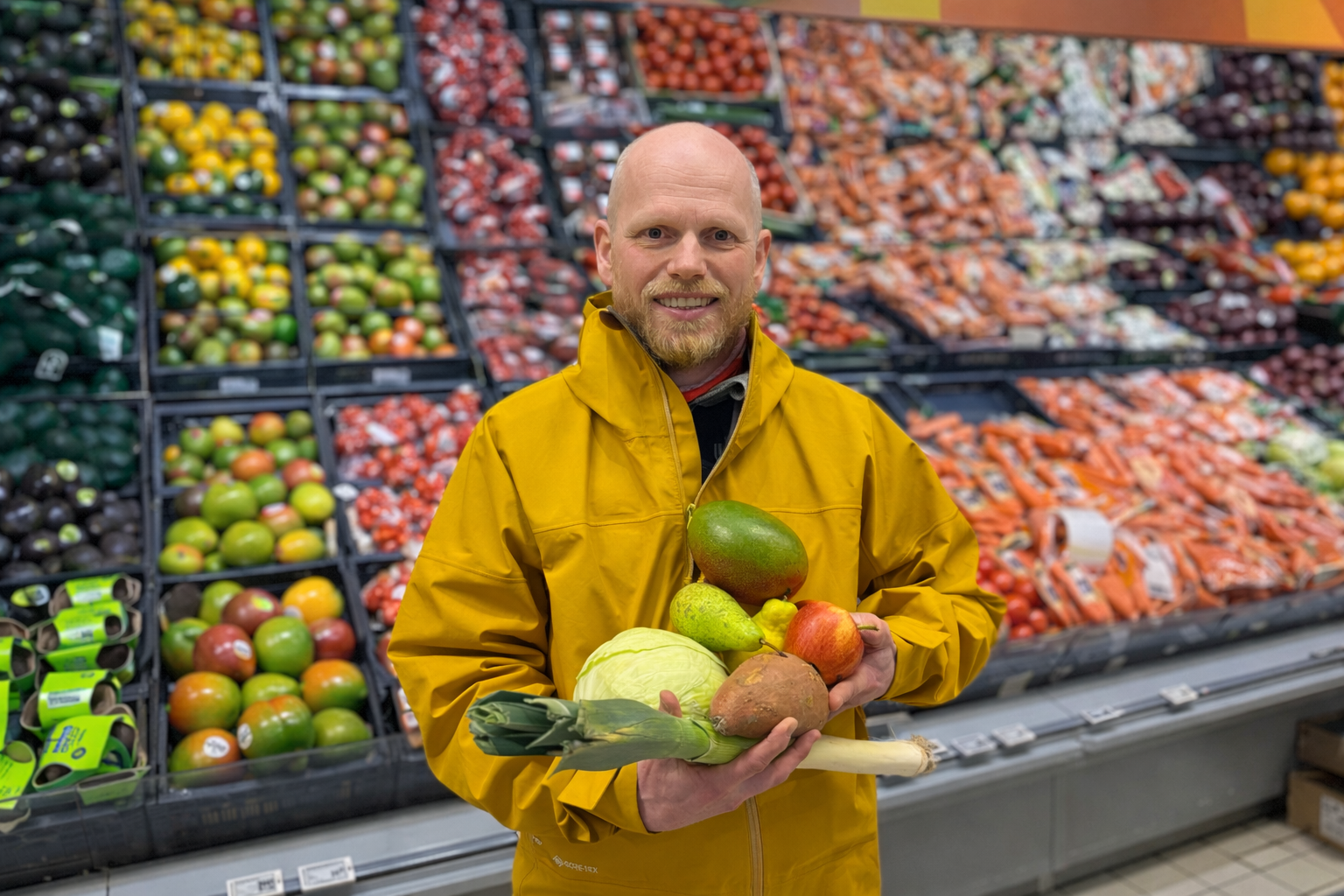
This week, partners from six European countries gather for the digital kick-off of AgroPolis, a new international research project that will explore how agroecology can strengthen sustainable food systems across Europe.
The project brings together researchers and stakeholders from Norway, Sweden, Germany, Slovenia, Italy and Spain. Together, they will develop and test new approaches to local food production, value chains and policy development.
"AgroPolis is unique because it looks at the entire food system, from production and processing to transport, markets and consumers," says Bjørn Vidar Vangelsten, project leader and Senior Researcher at Nordland Research Institute.
Strengthening local food systems
Agroecology is about more than how food is produced.
"It is about diversity, the use of local resources, and creating good social and economic conditions in agriculture. At a time when food preparedness and self-sufficiency have become more important, agroecology can be a way to strengthen local food systems," says Vangelsten.
He points out that much of the research on agroecology has focused mainly on food production itself.
"AgroPolis is special because we look at the entire value chain, from primary production to processing, storage, transport, markets and consumers."
Testing solutions in practice
The project will develop and test new ideas through so-called living labs.
This means that researchers, businesses, farmers, public authorities and other stakeholders will work together to test and develop solutions in practice.
In Slovenia, the project will test the use of cover crops. In Italy, the partners will explore how agroecological products can be marketed more effectively to consumers.
In Norway, two themes will be particularly important: public procurement of local food and how local and regional infrastructure for food production can be rebuilt.
Learning from the past
"We want to explore which business models could make it possible to strengthen local infrastructure such as dairies, slaughterhouses, packing facilities and storage. In many places, these functions have gradually disappeared," says Vangelsten.
The project will also map how such infrastructure was previously organized and what can be learned if there is a desire to re-establish or strengthen local solutions.
"We know that there is a critical level for how many farms and how much activity must remain in an area before the entire local environment starts to collapse."
Looking at the policy framework
The project will not only test practical solutions. It will also examine which policy frameworks are needed to create a different development.
"Farmers and other actors have acted rationally within the framework they have been given. If we want more local food preparedness and more agriculture across the country, we also need to look at the economic incentives and policy frameworks behind current developments," says Vangelsten.
The knowledge generated through the six national living labs will be brought together in a joint international policy effort.
"The goal is to identify what kind of policies are needed at both national and European level to strengthen agroecology and more sustainable food systems."
A timely project
AgroPolis has a budget of €1.64 million and will run for three years.
The project is coordinated by Nordland Research Institute and includes partners from Stockholm Environment Institute, Institute for Climate Protection, Energy and Mobility, Free University of Bozen-Bolzano, Foundation for Participatory Sustainability and Agricultural Institute of Slovenia.
AgroPolis is funded through the Agroecology Partnership, with national funding from the participating countries.
Vangelsten believes the project addresses issues that are highly relevant to both the agricultural sector and society.
"Food supply, preparedness and local production are much higher on the agenda now than before. That is why this project is very timely."
He hopes the project can contribute with new knowledge and new solutions.
"If we identify some key factors that have not received much attention before, and that can contribute to more sustainable food systems, that will be a major success."